Marketing Strategy
Marketing operations
Also known as: marketing ops, MOps
Marketing operations is the discipline that runs the systems, data, processes and reporting behind a marketing team. It covers the martech stack, campaign workflows, lead and account routing, governance and performance measurement. The aim is to make marketing repeatable, measurable and able to scale without adding friction.
What it is
Marketing operations, often shortened to marketing ops or MOps, is the function that owns how marketing work actually gets done. It typically looks after the technology stack, data hygiene, campaign processes, attribution and reporting, plus the rules and permissions that keep all of it consistent. In smaller teams it is one person wearing several hats; in larger organisations it is a specialist team sitting between marketing, sales and IT.
Why it matters
Discovery work now spans classic search, AI assistants, social platforms, email and paid media, and each channel produces its own data. Without operations, that data never joins up, so nobody can say which content earned demand or which pages are being cited and clicked. Good marketing ops turns scattered activity into a shared view of what is working, which makes budget decisions and content priorities far easier to defend.
How it works
Practitioners map the systems of record, agree definitions for key objects such as lead, opportunity and channel, then build the tracking, naming conventions and dashboards that keep those definitions intact. They automate the repeatable parts, such as campaign templates, UTM rules, form handling and routing, and document the rest so work does not depend on one person's memory. They also run regular audits of data quality, tool overlap, consent records and access permissions.
When it applies
It applies as soon as a team runs more than a handful of channels or tools, or once reporting questions take longer to answer than the work itself. It becomes essential during rebrands, CRM migrations, funding rounds and any period of fast headcount growth.
Examples
- A B2B SaaS team standardises UTM parameters and campaign naming so paid, email and organic traffic can be compared in one dashboard.
- A marketing ops lead sets up lead routing rules so demo requests reach the right sales territory within minutes rather than the next working day.
- A consultancy audits its stack, finds three tools sending overlapping nurture emails and consolidates them into one automation platform.
How it is measured
- Data quality measures such as duplicate rate, missing field rate and bounced email rate in the CRM
- Time from campaign request to launch, and time to produce monthly reporting
- Percentage of campaigns and sessions with complete, correctly formatted tracking
- Stack cost per active user or per campaign, alongside tool overlap and licence utilisation
Related terms in Marketing Strategy
- Agentic marketingAgentic marketing is the use of AI agents that can plan multi-step work and take actions across marketing tools, rather than only generating text on request. It also covers designing marketing for a world where buyers delegate research and purchasing to their own agents. In practice it is a mix of workflow automation, tool permissions and human review.
- AI searchAI search is the use of large language models to answer a query directly, usually with a written summary rather than a list of links. It covers AI overviews inside traditional search engines and assistants such as ChatGPT, Perplexity, Copilot and Gemini. The visible outcome for a brand is being described and cited inside an answer rather than ranked on a results page.
- AI-generated contentAI-generated content is text, images, audio, video or code produced wholly or mainly by a generative model rather than written or made by a person. It ranges from fully automated output to drafts that a human edits and approves. Its value in marketing depends on editorial control, accuracy and whether it adds anything a reader cannot get elsewhere.
- Audience intelligenceAudience intelligence is the practice of gathering and analysing data about who your audience is, what they care about, and how they search and buy, then turning that into decisions. It combines first party behavioural data with research, search data, social listening, and customer conversations. The output is usually segments, messaging guidance, and content priorities rather than a single report.
- B2B marketingB2B marketing is the practice of promoting products and services to other organisations rather than to individual consumers. It typically involves longer sales cycles, multiple decision makers, higher contract values and a heavier reliance on content, sales enablement and relationships. Success is usually measured through pipeline and revenue contribution rather than immediate transactions.
- Brand voiceBrand voice is the consistent personality and language a brand uses across every channel, covering vocabulary, tone, sentence rhythm and the things it will and will not say. It is documented in guidelines so different writers, agencies and AI tools produce work that sounds like the same organisation. Voice stays stable while tone flexes with context.
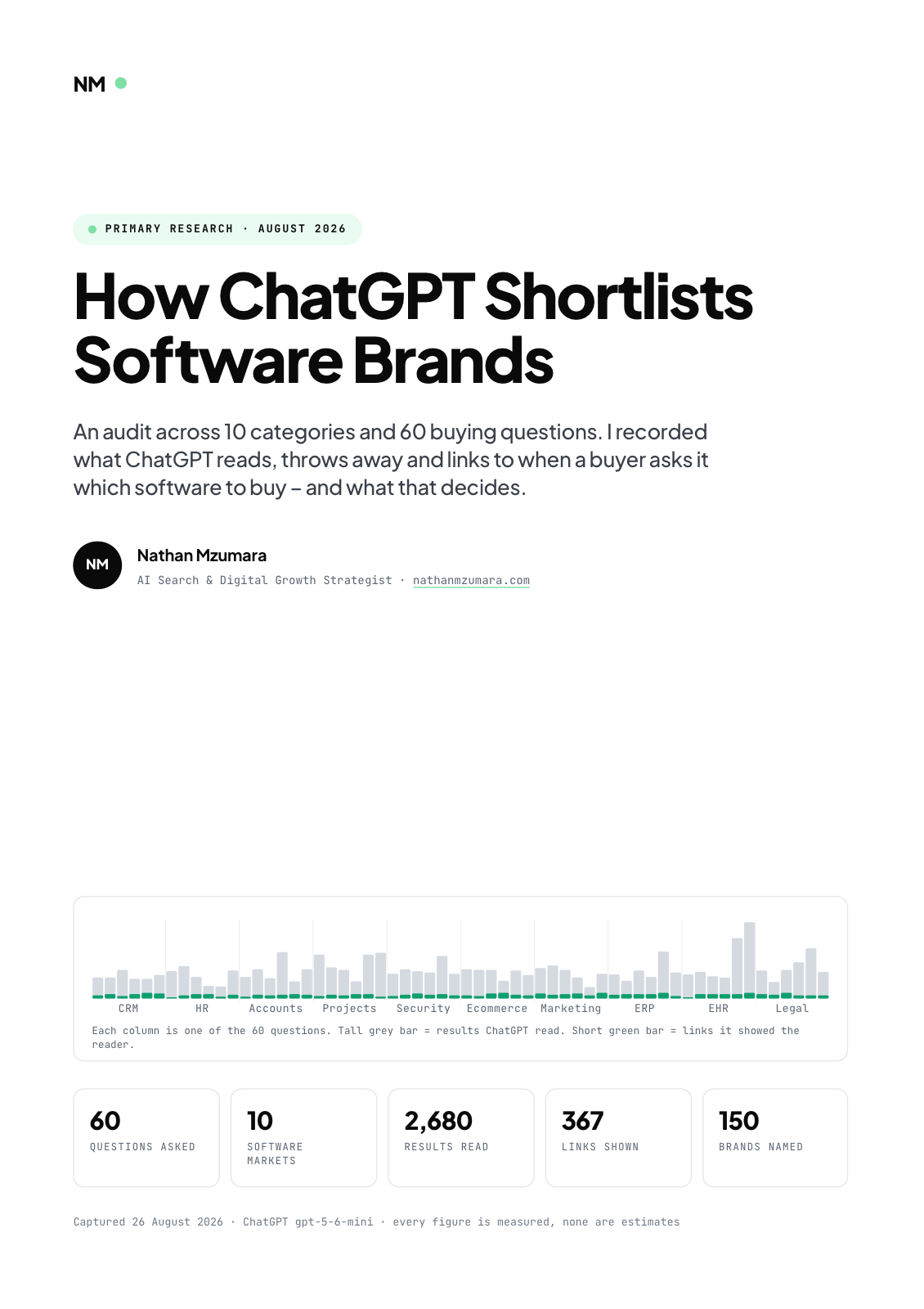
Primary research · August 2026
How ChatGPT Shortlists Software Brands
An audit across 10 categories and 60 buying questions. I recorded what ChatGPT reads, throws away and links to when a buyer asks it which software to buy, and what that decides.
- 60
- Questions asked
- 10
- Software markets
- 2,680
- Results read
- 367
- Links shown
Free download
Get the full report
35 pages · PDF · 536 KB. Enter your details and it downloads straight away.