Marketing Strategy
Agentic marketing
Also known as: agent-led marketing, agentic marketing operations
Agentic marketing is the use of AI agents that can plan multi-step work and take actions across marketing tools, rather than only generating text on request. It also covers designing marketing for a world where buyers delegate research and purchasing to their own agents. In practice it is a mix of workflow automation, tool permissions and human review.
What it is
An agent here means a model given a goal, a set of tools such as analytics, a CMS, an ad platform or a CRM, and the ability to loop through steps until the goal is met. Agentic marketing applies that pattern to tasks like briefing and drafting content, monitoring campaign performance, updating product data or triaging inbound leads. The second sense is market-facing: making your site, feeds and policies legible to agents acting for customers.
Why it matters
Much marketing work is repetitive coordination between systems, and agents can compress that cycle so teams spend more time on positioning and creative judgement. At the same time, if a share of research and comparison starts happening through assistants, then structured product data, clear pricing and machine-readable policies become a distribution issue rather than an admin task. Getting this wrong means either unreliable automation or invisibility to the tools your buyers use.
How it works
Teams usually start by mapping a narrow, well-instrumented workflow, then give an agent read access, a small number of write actions and an approval gate before anything publishes or spends. Guardrails include scoped credentials, logs of every tool call, evaluation sets for output quality and rollback plans. On the market-facing side, practitioners tidy structured data, publish specifications and pricing in crawlable form, and check how assistants currently describe their products.
When it applies
It applies when a marketing task is repeatable, the source data is reliable and the cost of an error is recoverable, and in any category where buyers already use AI assistants for research and shortlisting.
Examples
- An agent reviews search console and analytics weekly, drafts a prioritised list of pages to update, and opens tickets for a human editor to approve.
- A retail team runs an agent that checks feed disapprovals each morning, fixes attribute errors it can resolve and escalates the rest.
- A B2B team publishes a machine-readable pricing and integration page after finding assistants were quoting outdated figures from a third-party listing.
How it is measured
- Hours saved or cycle time per workflow before and after agent involvement
- Approval rate and edit distance on agent output, tracked as a quality signal
- Error and rollback rate on actions the agent took in live systems
- Accuracy of how AI assistants describe your pricing, availability and positioning across sampled prompts
Insights on Agentic marketing
Related terms in Marketing Strategy
- AI searchAI search is the use of large language models to answer a query directly, usually with a written summary rather than a list of links. It covers AI overviews inside traditional search engines and assistants such as ChatGPT, Perplexity, Copilot and Gemini. The visible outcome for a brand is being described and cited inside an answer rather than ranked on a results page.
- AI-generated contentAI-generated content is text, images, audio, video or code produced wholly or mainly by a generative model rather than written or made by a person. It ranges from fully automated output to drafts that a human edits and approves. Its value in marketing depends on editorial control, accuracy and whether it adds anything a reader cannot get elsewhere.
- Audience intelligenceAudience intelligence is the practice of gathering and analysing data about who your audience is, what they care about, and how they search and buy, then turning that into decisions. It combines first party behavioural data with research, search data, social listening, and customer conversations. The output is usually segments, messaging guidance, and content priorities rather than a single report.
- B2B marketingB2B marketing is the practice of promoting products and services to other organisations rather than to individual consumers. It typically involves longer sales cycles, multiple decision makers, higher contract values and a heavier reliance on content, sales enablement and relationships. Success is usually measured through pipeline and revenue contribution rather than immediate transactions.
- Brand voiceBrand voice is the consistent personality and language a brand uses across every channel, covering vocabulary, tone, sentence rhythm and the things it will and will not say. It is documented in guidelines so different writers, agencies and AI tools produce work that sounds like the same organisation. Voice stays stable while tone flexes with context.
- Content automationContent automation is the use of software, templates, data feeds and AI models to produce, update or distribute content with less manual effort at each step. It ranges from automatically refreshing prices and stock levels on a page to generating full drafts for human editing. The aim is consistency and scale, not the removal of editorial judgement.
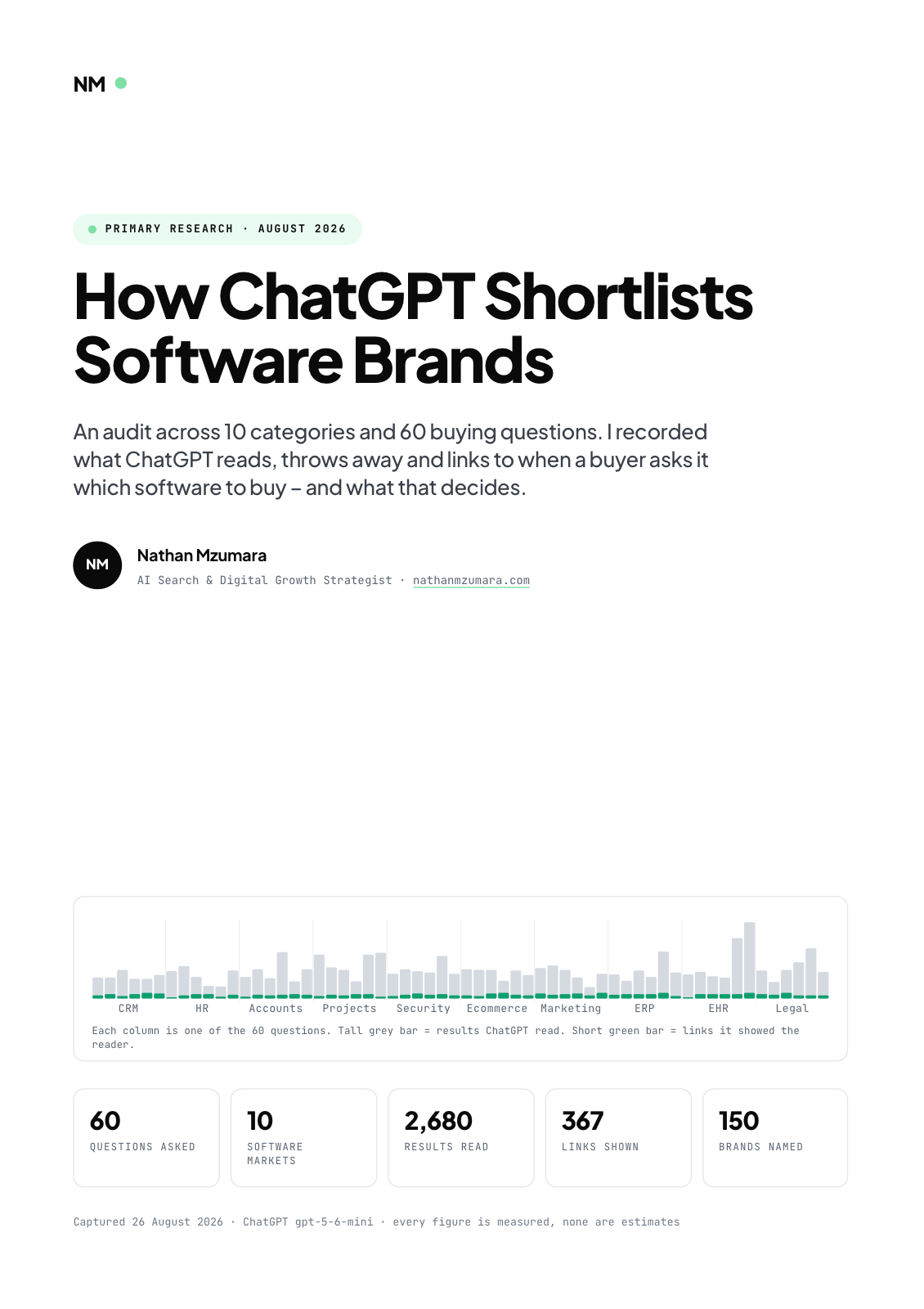
Primary research · August 2026
How ChatGPT Shortlists Software Brands
An audit across 10 categories and 60 buying questions. I recorded what ChatGPT reads, throws away and links to when a buyer asks it which software to buy, and what that decides.
- 60
- Questions asked
- 10
- Software markets
- 2,680
- Results read
- 367
- Links shown
Free download
Get the full report
35 pages · PDF · 536 KB. Enter your details and it downloads straight away.