Marketing Strategy
Audience intelligence
Also known as: audience insights, audience analytics
Audience intelligence is the practice of gathering and analysing data about who your audience is, what they care about, and how they search and buy, then turning that into decisions. It combines first party behavioural data with research, search data, social listening, and customer conversations. The output is usually segments, messaging guidance, and content priorities rather than a single report.
What it is
Audience intelligence pulls together several evidence types: analytics and CRM data you own, query and prompt patterns from search and AI assistants, community and review language, and qualitative input from interviews or sales calls. It looks for the questions people ask, the words they use, and the constraints that shape their choices. The result is a working picture of demand that teams can act on.
Why it matters
Content and product pages that mirror real audience language get found and cited more often, because both classic search and AI answer engines reward pages that match the intent behind a query. It also reduces waste: you stop writing for topics nobody asks about and stop bidding on terms that attract the wrong buyer. Shared audience understanding keeps briefs, campaigns, and sales messaging consistent.
How it works
Practitioners triangulate. They mine site search, query reports, and support tickets for actual phrasing, check review sites and communities for objections, run interviews for context, then group findings into segments with jobs to be done and buying triggers. Those segments feed content calendars, page structure, ad targeting, and the questions a page is designed to answer directly.
When it applies
It applies before any significant content, campaign, or positioning investment, and again on a regular cycle as markets shift. It is most valuable when several teams are making messaging decisions from different assumptions.
Examples
- A B2B software team reviews 200 sales call transcripts and finds procurement security questions dominate, so it adds a security FAQ section to key product pages.
- An ecommerce brand compares site search terms with paid keyword reports and finds shoppers use fit and material language the product pages never mention.
- A services firm reviews Reddit and industry forum threads to identify the three objections that stall deals, then writes a comparison page addressing each.
How it is measured
- Share of priority pages that use audience language captured in research
- Conversion rate by defined segment compared with site average
- Coverage of the top audience questions across your content set
- Change in qualified lead or enquiry quality after segment led messaging updates
Insights on Audience intelligence
Related terms in Marketing Strategy
- Agentic marketingAgentic marketing is the use of AI agents that can plan multi-step work and take actions across marketing tools, rather than only generating text on request. It also covers designing marketing for a world where buyers delegate research and purchasing to their own agents. In practice it is a mix of workflow automation, tool permissions and human review.
- AI searchAI search is the use of large language models to answer a query directly, usually with a written summary rather than a list of links. It covers AI overviews inside traditional search engines and assistants such as ChatGPT, Perplexity, Copilot and Gemini. The visible outcome for a brand is being described and cited inside an answer rather than ranked on a results page.
- AI-generated contentAI-generated content is text, images, audio, video or code produced wholly or mainly by a generative model rather than written or made by a person. It ranges from fully automated output to drafts that a human edits and approves. Its value in marketing depends on editorial control, accuracy and whether it adds anything a reader cannot get elsewhere.
- B2B marketingB2B marketing is the practice of promoting products and services to other organisations rather than to individual consumers. It typically involves longer sales cycles, multiple decision makers, higher contract values and a heavier reliance on content, sales enablement and relationships. Success is usually measured through pipeline and revenue contribution rather than immediate transactions.
- Brand voiceBrand voice is the consistent personality and language a brand uses across every channel, covering vocabulary, tone, sentence rhythm and the things it will and will not say. It is documented in guidelines so different writers, agencies and AI tools produce work that sounds like the same organisation. Voice stays stable while tone flexes with context.
- Content automationContent automation is the use of software, templates, data feeds and AI models to produce, update or distribute content with less manual effort at each step. It ranges from automatically refreshing prices and stock levels on a page to generating full drafts for human editing. The aim is consistency and scale, not the removal of editorial judgement.
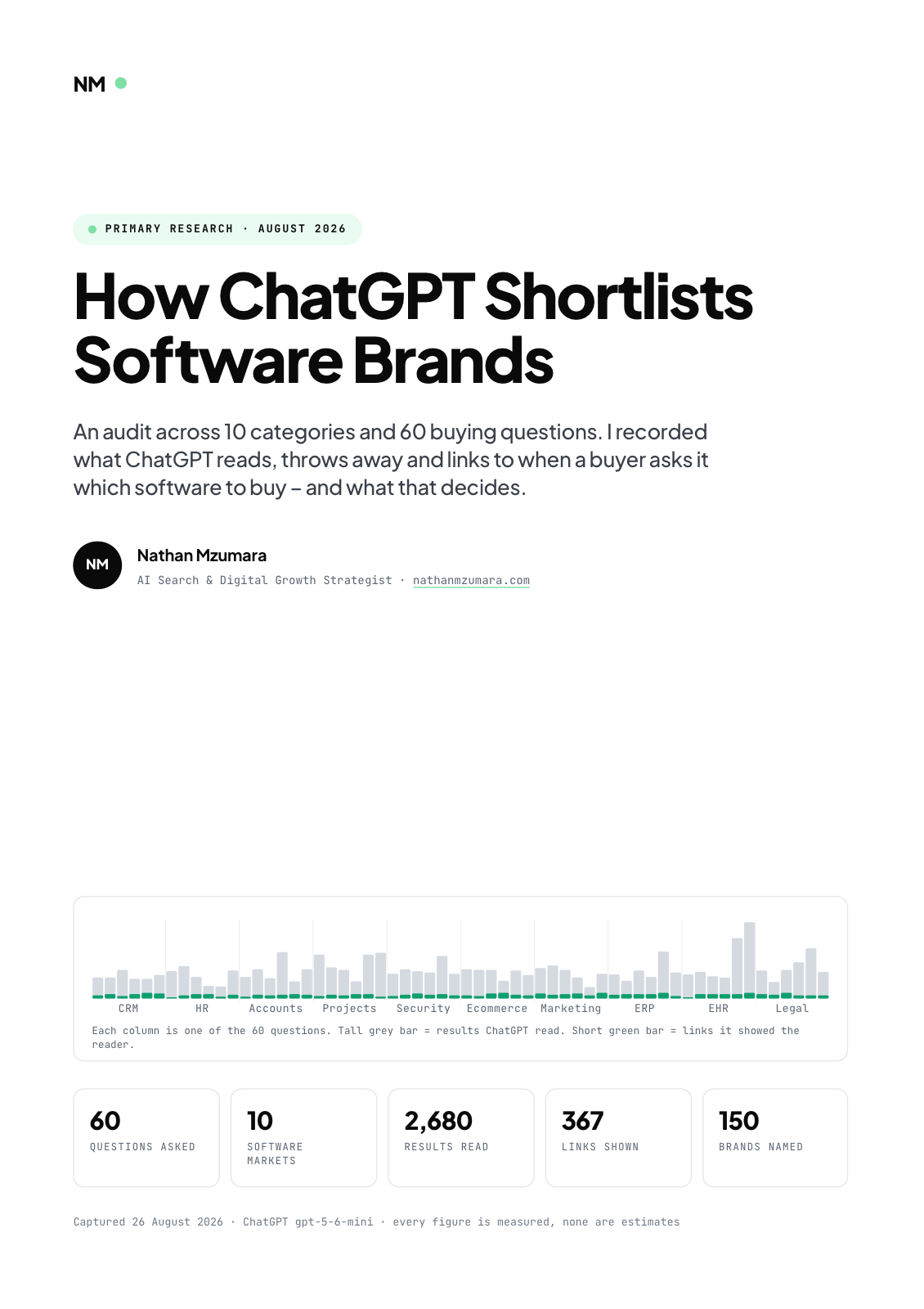
Primary research · August 2026
How ChatGPT Shortlists Software Brands
An audit across 10 categories and 60 buying questions. I recorded what ChatGPT reads, throws away and links to when a buyer asks it which software to buy, and what that decides.
- 60
- Questions asked
- 10
- Software markets
- 2,680
- Results read
- 367
- Links shown
Free download
Get the full report
35 pages · PDF · 536 KB. Enter your details and it downloads straight away.