Analytics & Measurement
Google Analytics 4
Also known as: GA4, Google Analytics
Google Analytics 4 is Google's event-based web and app analytics platform, which replaced Universal Analytics. It records user interactions as events rather than pageviews and sessions alone, and reports across web and app properties in one place. Marketers use it to measure traffic sources, engagement and conversions.
What it is
GA4 is a free analytics product built on an event and parameter data model, where a pageview, a scroll, a file download and a purchase are all events with attached parameters. It uses configurable key events rather than the older goal structure, and includes reporting, explorations and audience building. A BigQuery export is available for raw event-level analysis.
Why it matters
For most teams GA4 is the default record of how people arrive and what they do next, so it shapes how AI-driven discovery is perceived internally. Assistant referrals often land in referral or direct traffic unless you configure the property to recognise them, which means real AI-sourced demand can be invisible. Getting the setup right is a prerequisite for arguing that AI search deserves attention and budget.
How it works
Practitioners create custom channel groups or regex-based source rules to isolate domains such as chatgpt.com, perplexity.ai, copilot.microsoft.com and gemini.google.com. They mark meaningful actions as key events, use explorations for path and segment analysis, and export to BigQuery when they need joins with CRM data. Landing page reports filtered to assistant sources show which content is being surfaced.
When it applies
GA4 applies to any site or app where you need behavioural measurement and channel reporting, and it is the practical starting point for tracking AI referral traffic before investing in server-side logging or dedicated tools.
Examples
- A publisher builds a custom channel group called AI Assistants and watches its share of sessions month on month.
- A B2B site filters the landing pages report to assistant referrers and finds comparison pages attract the most AI-sourced visits.
- A retailer exports GA4 events to BigQuery to join session data with order records and measure revenue from AI referrals.
How it is measured
- Sessions and users from AI assistant sources as a share of total
- Engagement rate and average engagement time for AI-referred sessions
- Key event completions and conversion rate by AI source
- Growth or decline in direct traffic as a proxy for unattributed assistant journeys
Insights on Google Analytics 4
- GA4 Just Rebuilt Its Reporting Around a '+ Create' Button
- GA Now Writes Your Data Story First. Who Edits It?
- GA Just Brought Back Annotations. Who Owns Your Data Story Now?
- GA4 Just Made AI Traffic Countable. Here's How.
- Google Analytics Just Added a Gemini Chatbot. 'Ask Advisor' Changes How You Interrogate Your Data.
- Google Analytics Just Unified Paid and Organic Conversions in the Data API. 'De-Duplicated' Is the Word That Matters.
- Google Business Profile Now Links to GA4. Your Local Attribution Gap Just Closed.
- GA4 Now Tracks ChatGPT and Perplexity Traffic Automatically
Related terms in Analytics & Measurement
- A/B testingA/B testing is a controlled experiment that shows two or more versions of a page, email or feature to randomly split groups of users and compares how each performs against a chosen goal. It isolates the effect of a single change so improvement can be attributed rather than assumed. It is also called split testing.
- AttributionAttribution is the practice of assigning credit for a conversion to the marketing touchpoints that preceded it. It covers the models, rules and data joins used to decide which channels, campaigns or content get counted. In AI search, attribution is harder because many assistant-led journeys leave little or no referral data.
- Click-through rateClick-through rate is the proportion of people who saw something and then clicked it, expressed as clicks divided by impressions. It is used to judge search listings, ads, emails and internal links. A higher rate usually means the message matched what the audience was looking for.
- Consent ModeConsent Mode is a Google framework that lets tags adjust their behaviour based on the consent choices a visitor has made. Instead of tags being blocked outright, they receive signals about whether analytics and advertising storage are allowed, and act accordingly. Version 2 added parameters covering the use of personal data for ads and for ad personalisation.
- Conversion trackingConversion tracking is the practice of recording the actions you care about, such as purchases, form submissions or calls, and connecting them back to the channel, campaign or session that led to them. It gives advertising platforms and analytics tools the outcome data they need to report performance and optimise bidding. Accuracy depends on correct tag implementation, consent handling and clear conversion definitions.
- Cross-channel reportingCross-channel reporting is the practice of bringing performance data from search, social, email, paid media, AI assistants and other channels into a single view. It standardises metrics and time periods so channels can be compared fairly rather than judged in isolated platform dashboards. The aim is to show how channels work together to produce enquiries, sales and revenue.
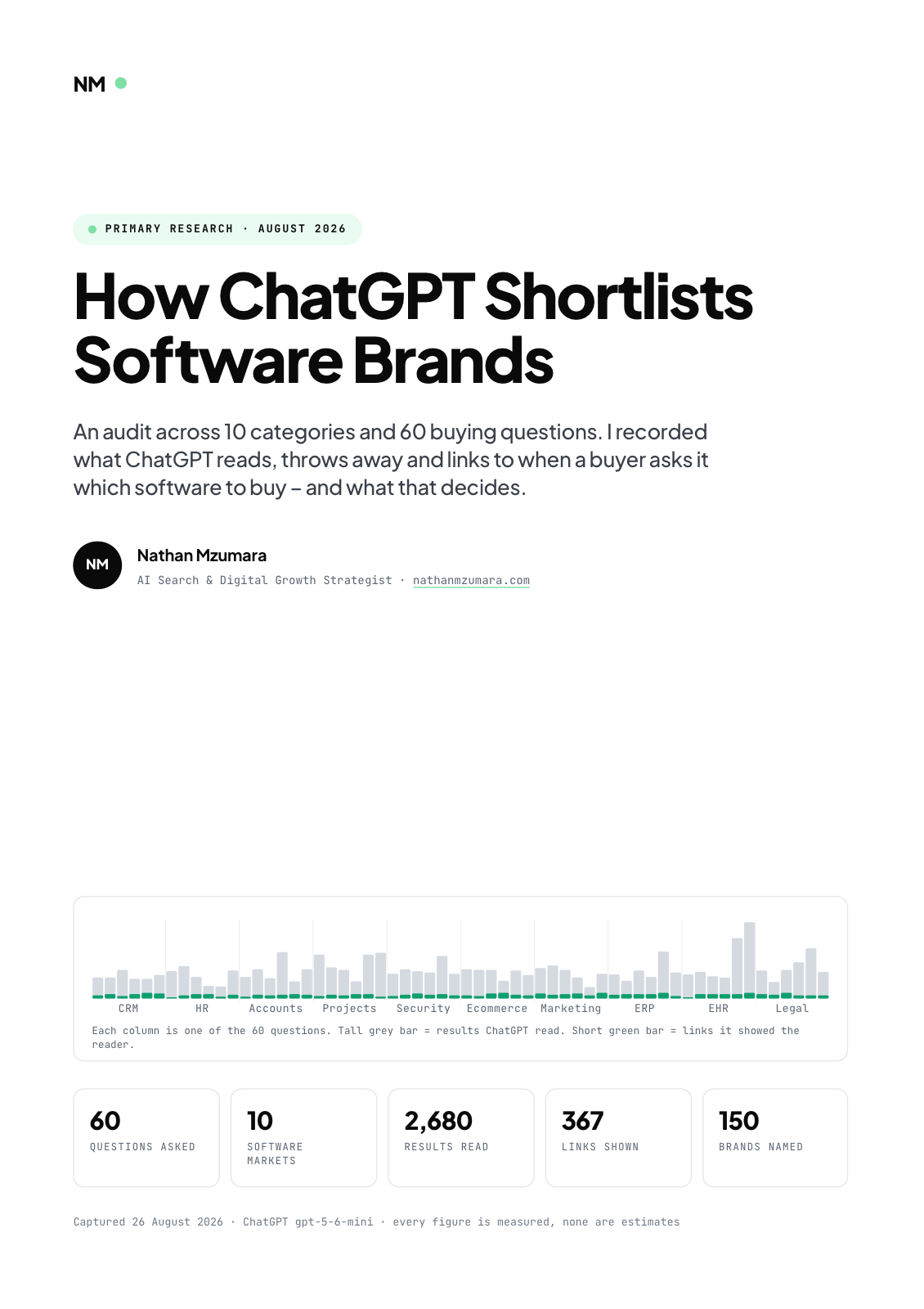
Primary research · August 2026
How ChatGPT Shortlists Software Brands
An audit across 10 categories and 60 buying questions. I recorded what ChatGPT reads, throws away and links to when a buyer asks it which software to buy, and what that decides.
- 60
- Questions asked
- 10
- Software markets
- 2,680
- Results read
- 367
- Links shown
Free download
Get the full report
35 pages · PDF · 536 KB. Enter your details and it downloads straight away.