ChatGPT UTM tracking disappears: AI referrals now look like direct traffic

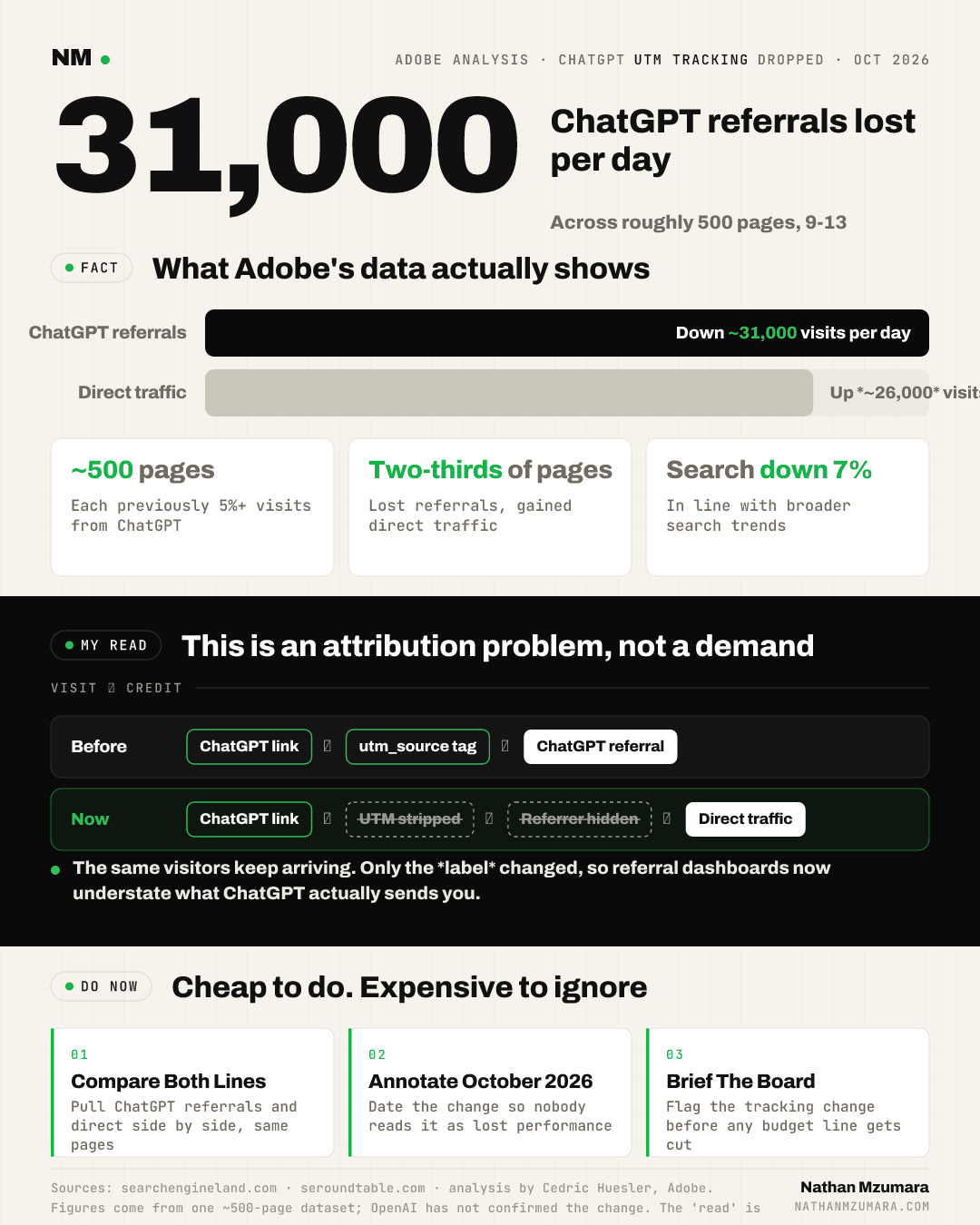
OpenAI appears to have removed ChatGPT UTM tracking parameters from its links, a change spotted after the release of GPT-6 in October 2026. Adobe's Cedric Huesler found that on around 500 pages, ChatGPT referrals fell by roughly 31,000 visits per day between 9 and 13 October, while direct traffic rose by about 26,000 on the same pages.
What changed in ChatGPT links
ChatGPT links appear to have stopped including the utm_source=chatgpt.com parameter that OpenAI introduced in June. A UTM parameter is a short tag added to the end of a URL so your analytics tool can see where a visit came from.
Cedric Huesler of Adobe reported that ChatGPT links are now being opened using a method that suppresses referral information as well. So two signals are missing at once: the tag in the URL and the referrer data the browser normally passes.
When both the UTM parameters and the referral data are absent, analytics platforms may classify those visits as direct traffic rather than attributing them to ChatGPT. The visit still happens. The label on it changes.
The change was spotted following the GPT-6 release, which also altered how ChatGPT presents answers. If you are tracking that shift, see our note on GPT-6 and the rendered answer interface.
What the Adobe data shows
Huesler examined approximately 500 pages where ChatGPT previously accounted for at least 5% of visits. He compared 9 to 13 October with the preceding week.
| Metric | Change (9-13 Oct vs prior week) |
|---|---|
| ChatGPT referral traffic | Down approximately 31,000 visits per day |
| Direct traffic | Up approximately 26,000 visits per day |
| Search traffic | Down 7%, consistent with broader search trends |
| Pages losing ChatGPT referrals | Two-thirds saw an increase in direct traffic |
The analysis also found similarities between the behaviour of newly classified direct visitors and previously identified ChatGPT visitors. In plain terms, the same kind of people kept arriving. They just arrived wearing a different label.
Full detail is in the Search Engine Land report on ChatGPT dropping UTM tracking, and Search Engine Roundtable covered the same finding in OpenAI drops UTM parameters from ChatGPT results.
Why this is an attribution problem, not a traffic problem
The findings suggest an attribution problem rather than a genuine decline in traffic from ChatGPT. Attribution is how your analytics tool decides which channel gets credit for a visit. Break the signal and the credit moves elsewhere.
Here the credit moved to direct. Direct traffic is the bucket analytics tools use when they cannot identify a source, so it quietly absorbs anything untagged.
This matters because a lot of AI visibility work is currently justified on referral numbers in a dashboard. If the referral line falls while direct rises by a similar amount, you are probably looking at a measurement change, not a drop in demand.
What this does not prove
OpenAI has not confirmed whether the change was intentional. There is no public statement explaining it.
The reported analysis also does not establish that every missing referral was caused by the same issue. Search traffic was down 7% in the same period, consistent with broader search trends, so some movement is unrelated.
Treat the Adobe finding as strong evidence from one dataset of around 500 pages, not as a confirmed platform policy. State that caveat clearly when you present it internally.
What to do this week
- Check the shape of the change. Pull ChatGPT referrals and direct traffic side by side for the week to 13 October and the week before. If one falls and the other rises by a similar amount on the same pages, you are seeing reclassification.
- Review landing pages together. Marketers should review referral trends, direct traffic and landing-page performance together before drawing conclusions about ChatGPT's effectiveness. Pages that previously took 5% or more of visits from ChatGPT are the ones to watch.
- Annotate your analytics. Add a dated note from October 2026 so nobody reads the drop as a performance failure in three months' time.
- Warn the board before the deck lands. A sudden decline in ChatGPT referrals alongside an increase in direct traffic may reflect a tracking change rather than a shift in user behaviour. Say that out loud before someone cuts a budget line.
- Diversify the evidence base. Lean on behavioural signals and paid measurement where you have them. Our piece on third-party attribution in ChatGPT Ads covers one route.
The wider measurement risk in losing ChatGPT UTM tracking
As AI assistants become another source of website discovery, accurate attribution matters more for measuring their marketing impact. Changes to how AI platforms handle outbound links can make that measurement harder, even when actual visitor numbers stay relatively stable.
ChatGPT's apparent removal of UTM parameters could be masking AI-driven visits as direct traffic. Until the ChatGPT UTM tracking behaviour is clarified, treat sudden drops in ChatGPT referral traffic with caution.
