Consumer Behaviour
Visual search
Also known as: image search, camera search, search by image
Visual search is the practice of searching with an image rather than typed words, using a camera, a photo or a screenshot as the query. Systems identify what is in the image and return matching products, information or visually similar results. It is offered by tools such as Google Lens, Pinterest Lens, Amazon and Bing Visual Search.
What it is
Visual search covers any query where the primary input is an image. It includes exact product matching, similar item recommendations, text extraction from photos, and identification of objects, places, plants and animals. Most implementations now allow text to be added to the image, which makes visual search a form of multimodal search.
Why it matters
It creates demand from moments when someone cannot name what they want, which is common in fashion, interiors, DIY and spare parts. For ecommerce, it can shorten the path from inspiration to purchase, and it rewards clean, distinctive product imagery rather than keyword density alone. It also affects attribution, since visual entry points are often poorly labelled in analytics and can be undercounted.
How it works
Models convert images into numerical representations and find near matches in an index, then rank them using commerce and relevance signals. Practitioners support this with consistent photography standards, plain backgrounds for at least one image per product, multiple angles, correct image sitemaps, descriptive alt text and file names, Product structured data, and complete feeds including identifiers. On site visual search, where shoppers upload a photo to find products in your own catalogue, is a separate build using a vision search provider or in house model.
When it applies
It applies wherever appearance drives choice, or where the item is hard to describe in words. It is most useful for large catalogues with visually varied products and for businesses whose customers browse on mobile.
Examples
- A shopper uploads a photo of a patterned cushion to a retailer's site and sees matching items in stock.
- A cyclist photographs a worn brake pad to find the correct replacement part.
- A homeowner photographs a tile in a showroom and finds the same range online with prices.
How it is measured
- Image pack and image tab impressions and clicks in Search Console
- Usage and conversion rate of any on site camera or upload search feature
- Proportion of catalogue with at least one clean, plain background image at required resolution
- Match accuracy in sampled tests, measured as correct product returned in the top results
Insights on Visual search
Related terms in Consumer Behaviour
- Agentic browserA browser (or browsing layer) that uses an LLM agent to interpret pages, summarise content, and take actions on behalf of the user. Arc Search, Perplexity Comet, Browser Company's Dia, Dia browser, and similar.
- Agentic commerceAgentic commerce is buying and selling in which an AI agent completes part or all of the purchase on a person's behalf, from finding products to placing the order. Instead of browsing a site, the shopper states an intent and the agent searches, compares, fills the cart and sometimes pays. It shifts the point of decision away from the merchant's own interface and towards the assistant.
- Brand demandSearch volume for branded terms. In an AI-search world, brand demand is the single strongest moat, generic queries are absorbed by AI Overviews and ChatGPT, while branded queries route users directly to brand properties.
- Brand discoveryBrand discovery is the process by which someone encounters a brand for the first time, or becomes newly aware it can solve their problem. It happens across search results, AI assistants, social feeds, communities, creators, reviews, marketplaces and word of mouth. Marketers study it to work out which surfaces introduce them to future customers.
- Consumer behaviour signalObservable patterns in how users phrase queries, refine searches, and choose answers, used by both ranking systems and generative models to infer intent and quality.
- Conversational searchConversational search is the pattern of finding information through a back and forth dialogue rather than a single keyword query, with each follow-up interpreted in the context of what came before. Users ask broad questions, then narrow with refinements such as cheaper, nearby or without the subscription. It shifts discovery from ranked link lists towards answers that must survive several rounds of questioning.
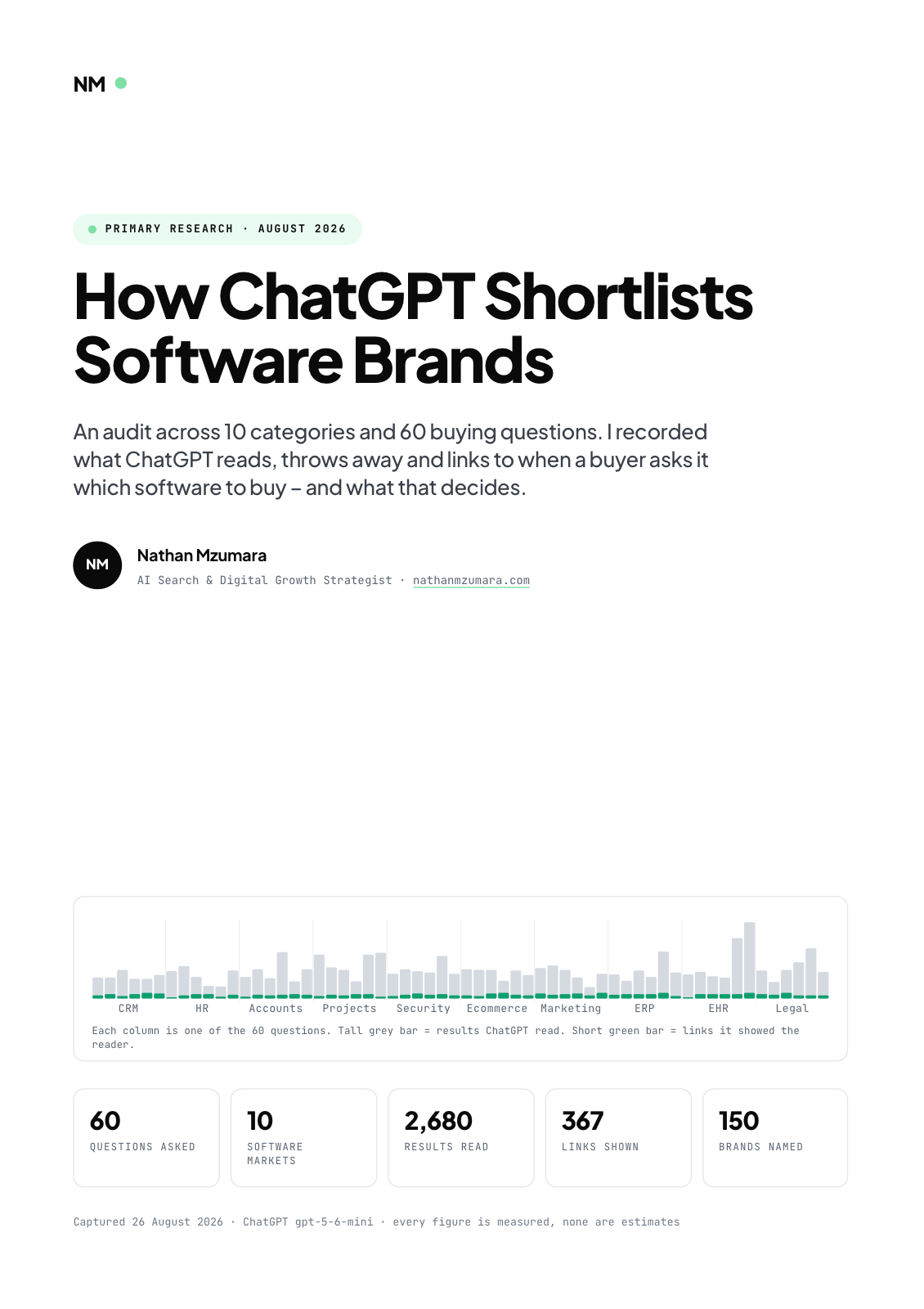
Primary research · August 2026
How ChatGPT Shortlists Software Brands
An audit across 10 categories and 60 buying questions. I recorded what ChatGPT reads, throws away and links to when a buyer asks it which software to buy, and what that decides.
- 60
- Questions asked
- 10
- Software markets
- 2,680
- Results read
- 367
- Links shown
Free download
Get the full report
35 pages · PDF · 536 KB. Enter your details and it downloads straight away.