Advertising & Paid Media
Paid media
Also known as: paid advertising, paid channels, bought media
Paid media is any exposure a brand buys rather than earns, including search ads, social ads, display, video, retail media and sponsorships. It sits alongside owned media (your site, email list, app) and earned media (coverage, mentions, word of mouth). Because it is bought, reach starts and stops with the budget.
What it is
Paid media covers the placements a business pays for to put a message in front of an audience, from Google Ads and Meta ads to podcast reads, paid influencer posts and marketplace ad slots. It is usually managed in auctions or on negotiated rates, with targeting set by keyword, audience, context or placement. The category is defined by the commercial arrangement, not the format.
Why it matters
Paid media gives you demand you can turn on quickly, which makes it the usual way to test messages, landing pages and offers before committing to slower organic work. It also fills the gaps where organic and AI-assisted discovery do not reach you, such as new markets, competitor comparison searches or product launches. Read together with organic and direct data, it shows what people actually respond to.
How it works
Practitioners split budget by intent, using search and shopping ads for existing demand and social, video and display for demand creation, then measure through platform reporting, analytics and incrementality or geo tests. Creative and landing pages are iterated on a regular cycle, with bids and budgets managed against a target cost per acquisition or return on ad spend. Many teams recycle winning ad copy into organic page titles, headings and FAQ content.
When it applies
It applies whenever you need reach faster than organic can supply, want to test demand for a new proposition, or need coverage for high value queries you do not rank for. It is also used defensively on brand terms and in competitive retail or comparison categories.
Examples
- A B2B software firm runs Google Search ads on competitor comparison keywords while its own comparison pages build authority.
- A homeware retailer buys Amazon sponsored product placements during a seasonal sale, then reports revenue against ad spend by SKU.
- A local dental practice tests three Meta ad creatives for implant consultations and moves the winning message into its service page headline.
How it is measured
- Cost per acquisition and return on ad spend by campaign and channel
- Impression share or share of voice on priority keywords
- Incremental conversions from geo holdout or conversion lift tests
- Blended customer acquisition cost across paid, organic and direct
Related terms in Advertising & Paid Media
- AI-generated creativeAI-generated creative is ad and marketing creative produced or adapted using generative models, including images, video, voiceover, headlines and body copy. Teams use it to produce more variants, localise faster and test concepts that would be too costly to shoot. It still needs human direction, brand review and legal checks before it runs.
- Asset groupsAn asset group is the creative container inside a Google Performance Max or Demand Gen campaign, holding headlines, descriptions, images, logos, videos and audience signals. Google assembles ads from these assets and serves them across Search, Shopping, YouTube, Display, Discover, Gmail and Maps. Retail campaigns can tie an asset group to a specific set of products through listing groups.
- Brand safetyBrand safety is the practice of preventing advertising and brand content from appearing next to material that could damage reputation, such as violent, illegal or misleading content. Brand suitability is the related, narrower idea of matching placements to a specific brand's tolerance and values rather than a universal baseline. Both rely on exclusion lists, content classification and verification reporting.
- ChatGPT AdsChatGPT Ads refers to advertising placements inside OpenAI's ChatGPT. OpenAI has publicly signalled that advertising is part of its commercial plans and has been testing and building out ad capabilities, so the format details continue to change. For marketers it represents a possible new paid surface alongside organic visibility in AI assistants.
- ChatGPT Sponsored AgentsChatGPT Sponsored Agents is the name given to a paid placement format in which a brand's agent or assistant can be surfaced inside a ChatGPT conversation to help complete a task, such as booking, quoting or buying. It sits alongside other advertising formats OpenAI has discussed for ChatGPT, where commercial results are marked as sponsored rather than blended invisibly into answers. Availability, naming and mechanics are still moving, so treat any specification as provisional and check current OpenAI documentation before planning spend.
- Conversational advertisingConversational advertising is paid placement inside a dialogue, whether that is an AI assistant, a chatbot, a messaging app or a voice interface. Instead of a static creative next to content, the ad appears as a response, suggestion or handover at the point where the user has expressed intent. The defining features are turn-by-turn context, a disclosure label, and the option for the user to keep talking rather than click away.
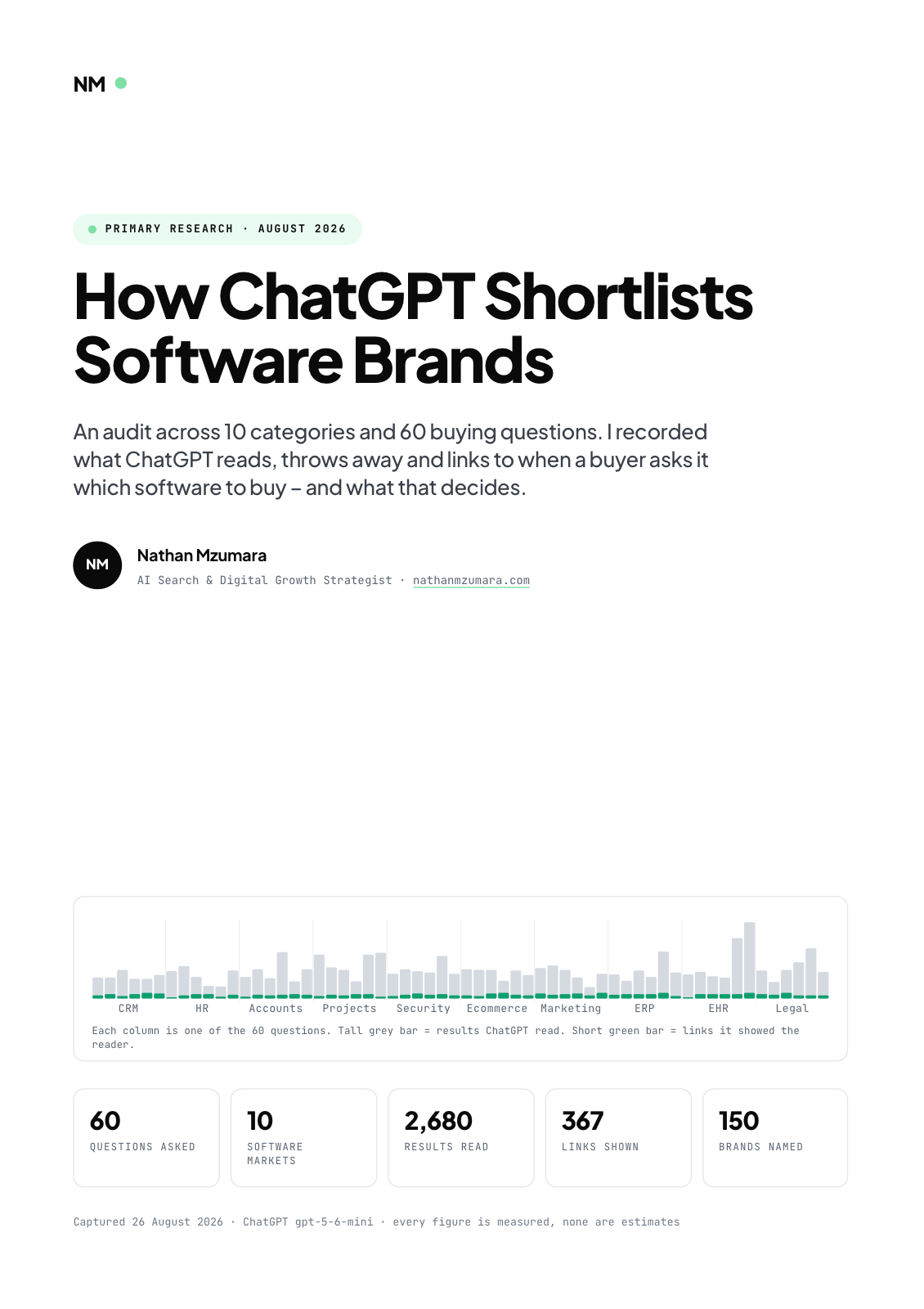
Primary research · August 2026
How ChatGPT Shortlists Software Brands
An audit across 10 categories and 60 buying questions. I recorded what ChatGPT reads, throws away and links to when a buyer asks it which software to buy, and what that decides.
- 60
- Questions asked
- 10
- Software markets
- 2,680
- Results read
- 367
- Links shown
Free download
Get the full report
35 pages · PDF · 536 KB. Enter your details and it downloads straight away.