Advertising & Paid Media
ChatGPT Sponsored Agents
Also known as: Sponsored Agents, OpenAI Sponsored Agents, sponsored agents in ChatGPT
ChatGPT Sponsored Agents is the name given to a paid placement format in which a brand's agent or assistant can be surfaced inside a ChatGPT conversation to help complete a task, such as booking, quoting or buying. It sits alongside other advertising formats OpenAI has discussed for ChatGPT, where commercial results are marked as sponsored rather than blended invisibly into answers. Availability, naming and mechanics are still moving, so treat any specification as provisional and check current OpenAI documentation before planning spend.
What it is
A sponsored agent is a brand-controlled assistant that an AI platform can offer to a user part way through a conversation, in exchange for payment, when the user's intent matches what the brand does. Unlike a banner or a text ad, the unit is interactive: the user can hand the task over and keep talking. The format is emerging, and the exact labelling, auction model and eligibility rules are set by the platform rather than the advertiser.
Why it matters
Assistants increasingly sit between a person and the moment they choose a supplier, so paid placement inside the conversation is a route to demand that never reaches a search results page or a website. For marketers it introduces a new inventory type where the creative asset is a working agent rather than a headline and a link. It also raises measurement and governance questions early, because the interaction happens on someone else's surface.
How it works
In practice a brand would connect a system that can answer questions and take actions, usually through an API or an agent protocol, define the intents and geographies it wants to appear for, and accept the platform's disclosure and data rules. The platform decides when to offer the agent, applies a sponsored label, and passes qualified conversations through. Practitioners prepare by tightening product data, pricing logic and handover paths, so an agent has something reliable to work from.
When it applies
Relevant when a brand sells something an assistant could realistically arrange or transact on a user's behalf, and when budget holders are already testing AI assistant visibility. Less relevant for organisations with long human-led sales cycles or heavy regulatory constraints on automated advice.
Examples
- A hotel group connects a booking agent so ChatGPT users asking about family rooms in Edinburgh can check dates and rates without leaving the chat.
- An insurance broker pilots a sponsored agent that gathers details and returns an indicative quote, then hands the user to a human adviser for completion.
- A DTC electronics brand tests a sponsored agent for replacement parts queries, measuring how many conversations end in a completed order.
How it is measured
- Sponsored agent impressions and handover rate, meaning how often users accept the offer to continue with your agent
- Task completion rate within the agent, such as bookings, quotes or orders finished without abandonment
- Cost per completed action compared with paid search and paid social for the same intent
- Assisted revenue and downstream retention from users first acquired through the agent
Insights on ChatGPT Sponsored Agents
Related terms in Advertising & Paid Media
- AI-generated creativeAI-generated creative is ad and marketing creative produced or adapted using generative models, including images, video, voiceover, headlines and body copy. Teams use it to produce more variants, localise faster and test concepts that would be too costly to shoot. It still needs human direction, brand review and legal checks before it runs.
- Asset groupsAn asset group is the creative container inside a Google Performance Max or Demand Gen campaign, holding headlines, descriptions, images, logos, videos and audience signals. Google assembles ads from these assets and serves them across Search, Shopping, YouTube, Display, Discover, Gmail and Maps. Retail campaigns can tie an asset group to a specific set of products through listing groups.
- Brand safetyBrand safety is the practice of preventing advertising and brand content from appearing next to material that could damage reputation, such as violent, illegal or misleading content. Brand suitability is the related, narrower idea of matching placements to a specific brand's tolerance and values rather than a universal baseline. Both rely on exclusion lists, content classification and verification reporting.
- ChatGPT AdsChatGPT Ads refers to advertising placements inside OpenAI's ChatGPT. OpenAI has publicly signalled that advertising is part of its commercial plans and has been testing and building out ad capabilities, so the format details continue to change. For marketers it represents a possible new paid surface alongside organic visibility in AI assistants.
- Conversational advertisingConversational advertising is paid placement inside a dialogue, whether that is an AI assistant, a chatbot, a messaging app or a voice interface. Instead of a static creative next to content, the ad appears as a response, suggestion or handover at the point where the user has expressed intent. The defining features are turn-by-turn context, a disclosure label, and the option for the user to keep talking rather than click away.
- Demand Gen campaignsDemand Gen is a Google Ads campaign type built for visually led prospecting across YouTube, Discover, Gmail and other Google feeds. Advertisers supply image, video and text assets plus audience signals, and Google's systems assemble and place ads to create interest before someone actively searches. It replaced Discovery campaigns and sits between upper funnel video and lower funnel search or shopping activity.
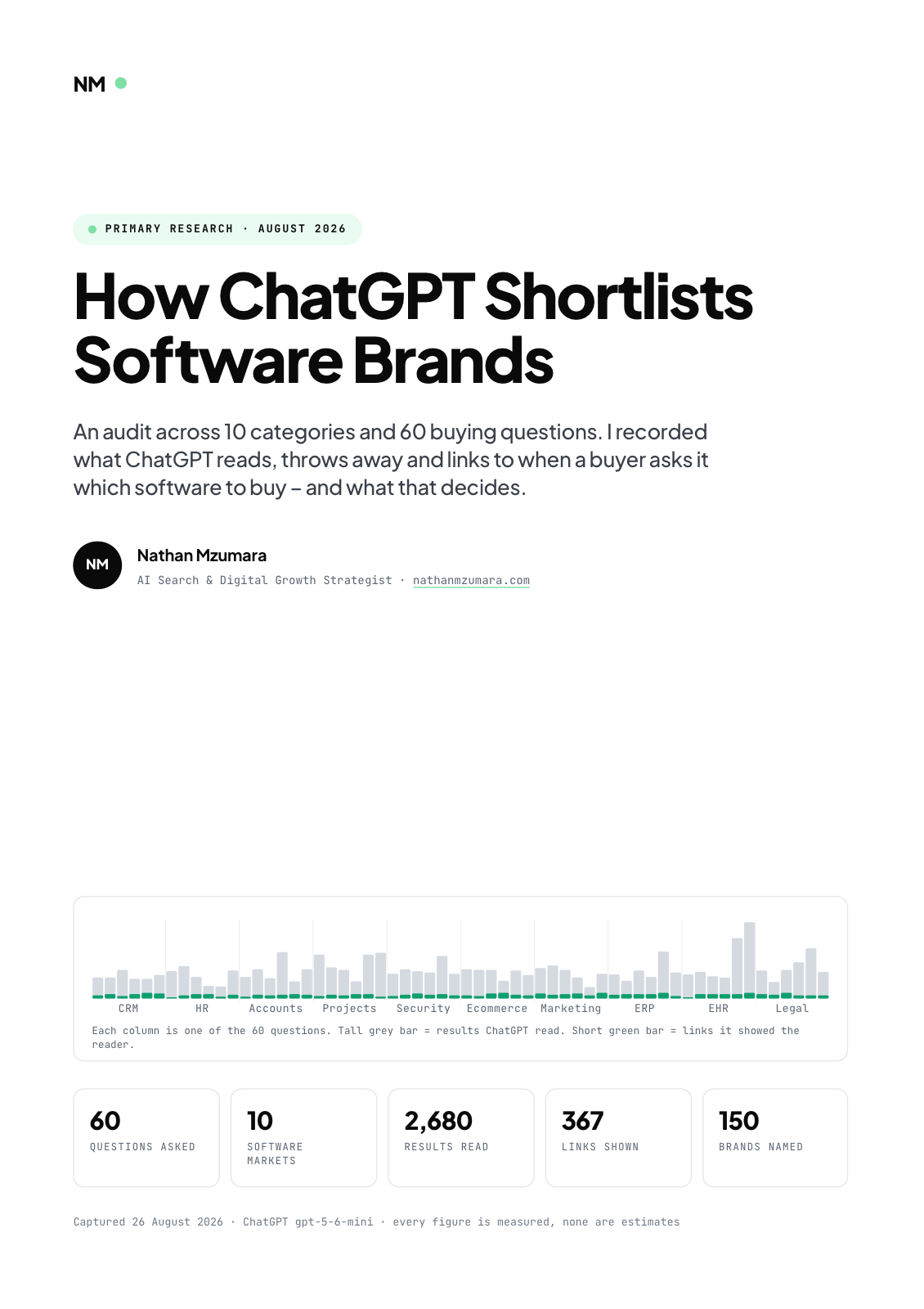
Primary research · August 2026
How ChatGPT Shortlists Software Brands
An audit across 10 categories and 60 buying questions. I recorded what ChatGPT reads, throws away and links to when a buyer asks it which software to buy, and what that decides.
- 60
- Questions asked
- 10
- Software markets
- 2,680
- Results read
- 367
- Links shown
Free download
Get the full report
35 pages · PDF · 536 KB. Enter your details and it downloads straight away.