Advertising & Paid Media
Conversion window
Also known as: attribution window, lookback window
A conversion window is the period of time after someone clicks, views or otherwise interacts with an ad during which a resulting conversion will be credited to that ad. If the conversion happens after the window closes, the platform does not attribute it to the interaction. Windows are set per conversion action or per campaign, and different platforms use different defaults, so the same sale can be counted by one channel and ignored by another.
What it is
A conversion window, also called an attribution or lookback window, is the rule that decides how long an ad interaction stays eligible to take credit for a conversion. Most platforms define separate windows for clicks and for views, with view windows usually much shorter than click windows. The setting sits inside the ad platform's conversion tracking configuration rather than in your analytics tool.
Why it matters
The window length directly changes how many conversions a channel appears to produce, which in turn changes reported cost per acquisition, return on ad spend and any automated bidding that learns from those numbers. Long consideration journeys, common in B2B, high value retail and services, will look unprofitable if the window is shorter than the real decision cycle. Because platforms differ, mismatched windows are a frequent cause of arguments between channel reports and the finance view of revenue.
How it works
Practitioners start by measuring the real time from first click to purchase, then set the window to cover the bulk of that distribution rather than defaulting to whatever the platform suggests. They keep windows consistent across campaigns within a channel so that comparisons hold, document any change with a date so before and after reporting is not read as performance movement, and allow for a reporting lag before judging recent periods. Some teams run a shorter window for fast moving promotions and a longer one for considered purchases, tracked as separate conversion actions.
When it applies
It applies whenever you run paid media with platform side conversion tracking, and matters most where the buying cycle is long or where several channels claim the same sale.
Examples
- A B2B software advertiser finds most demo requests come 20 to 40 days after the first click, so extends the click window beyond the platform default and sees reported cost per lead fall.
- A retailer compares a 7 day and a 1 day click window during a sale period and uses the gap to estimate how much credit comes from delayed purchases.
- An agency shortens the view-through window on a display campaign because reported conversions far exceed the orders recorded in the ecommerce back office.
How it is measured
- Time lag from click to conversion, shown as a distribution rather than an average
- Conversions and cost per acquisition reported under different window settings for the same period
- Share of conversions occurring after day one, day seven and day 30
- Platform reported conversions compared with orders confirmed in the CRM or order system
Insights on Conversion window
Related terms in Advertising & Paid Media
- AI-generated creativeAI-generated creative is ad and marketing creative produced or adapted using generative models, including images, video, voiceover, headlines and body copy. Teams use it to produce more variants, localise faster and test concepts that would be too costly to shoot. It still needs human direction, brand review and legal checks before it runs.
- Asset groupsAn asset group is the creative container inside a Google Performance Max or Demand Gen campaign, holding headlines, descriptions, images, logos, videos and audience signals. Google assembles ads from these assets and serves them across Search, Shopping, YouTube, Display, Discover, Gmail and Maps. Retail campaigns can tie an asset group to a specific set of products through listing groups.
- Brand safetyBrand safety is the practice of preventing advertising and brand content from appearing next to material that could damage reputation, such as violent, illegal or misleading content. Brand suitability is the related, narrower idea of matching placements to a specific brand's tolerance and values rather than a universal baseline. Both rely on exclusion lists, content classification and verification reporting.
- ChatGPT AdsChatGPT Ads refers to advertising placements inside OpenAI's ChatGPT. OpenAI has publicly signalled that advertising is part of its commercial plans and has been testing and building out ad capabilities, so the format details continue to change. For marketers it represents a possible new paid surface alongside organic visibility in AI assistants.
- ChatGPT Sponsored AgentsChatGPT Sponsored Agents is the name given to a paid placement format in which a brand's agent or assistant can be surfaced inside a ChatGPT conversation to help complete a task, such as booking, quoting or buying. It sits alongside other advertising formats OpenAI has discussed for ChatGPT, where commercial results are marked as sponsored rather than blended invisibly into answers. Availability, naming and mechanics are still moving, so treat any specification as provisional and check current OpenAI documentation before planning spend.
- Conversational advertisingConversational advertising is paid placement inside a dialogue, whether that is an AI assistant, a chatbot, a messaging app or a voice interface. Instead of a static creative next to content, the ad appears as a response, suggestion or handover at the point where the user has expressed intent. The defining features are turn-by-turn context, a disclosure label, and the option for the user to keep talking rather than click away.
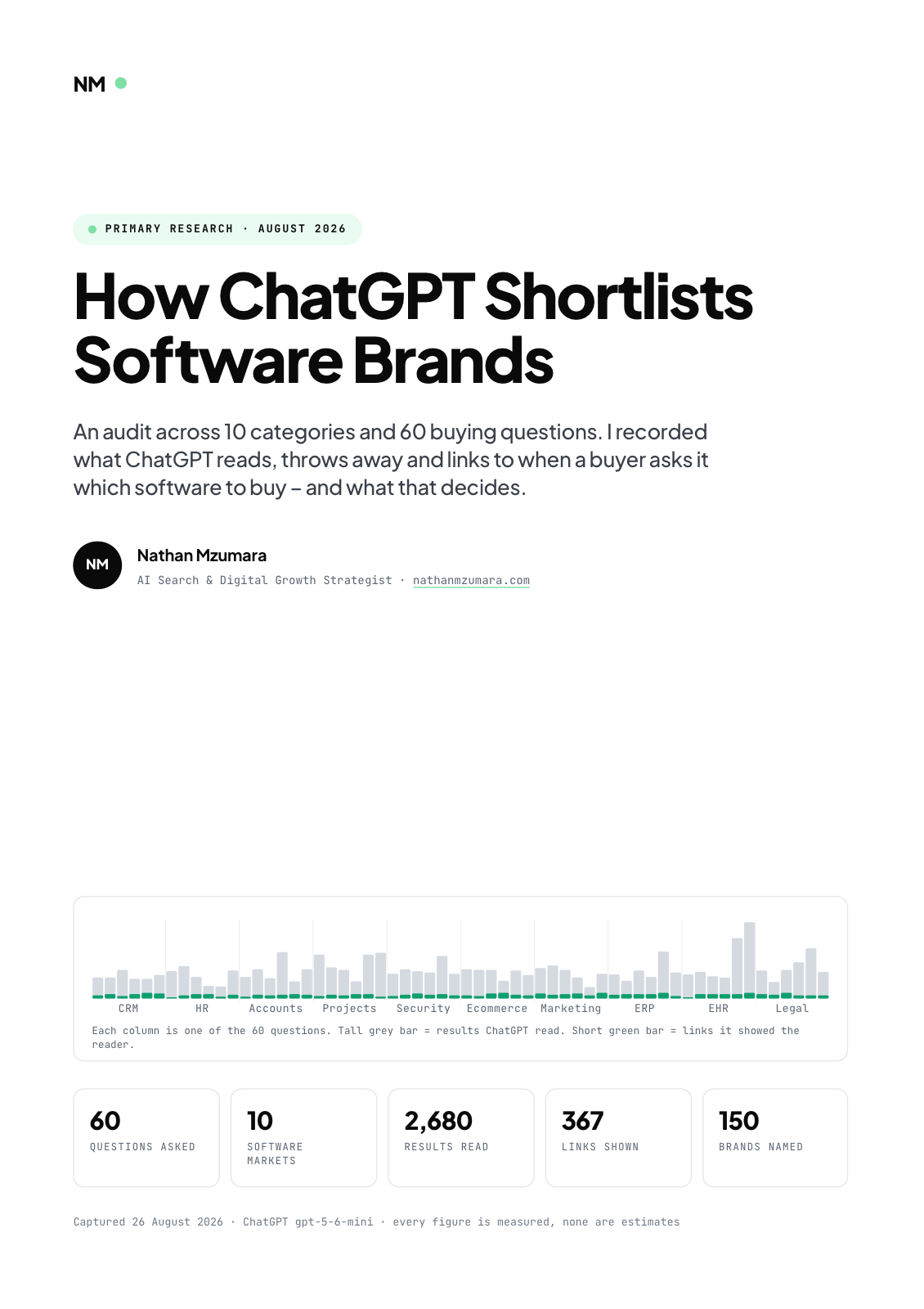
Primary research · August 2026
How ChatGPT Shortlists Software Brands
An audit across 10 categories and 60 buying questions. I recorded what ChatGPT reads, throws away and links to when a buyer asks it which software to buy, and what that decides.
- 60
- Questions asked
- 10
- Software markets
- 2,680
- Results read
- 367
- Links shown
Free download
Get the full report
35 pages · PDF · 536 KB. Enter your details and it downloads straight away.