Google Goto URL Redirects: What They Mean for SEO and Rank Tracking

Google goto URL redirects are a new technical measure that reroute clicks on search results through a google.com/goto?url=[hashURL] link before sending you to the page. Google confirmed the rollout on 26 August 2026, framing it as a step against abuse of its search results. For SEO teams, the real story is what it does to third-party rank tracking and scraping.
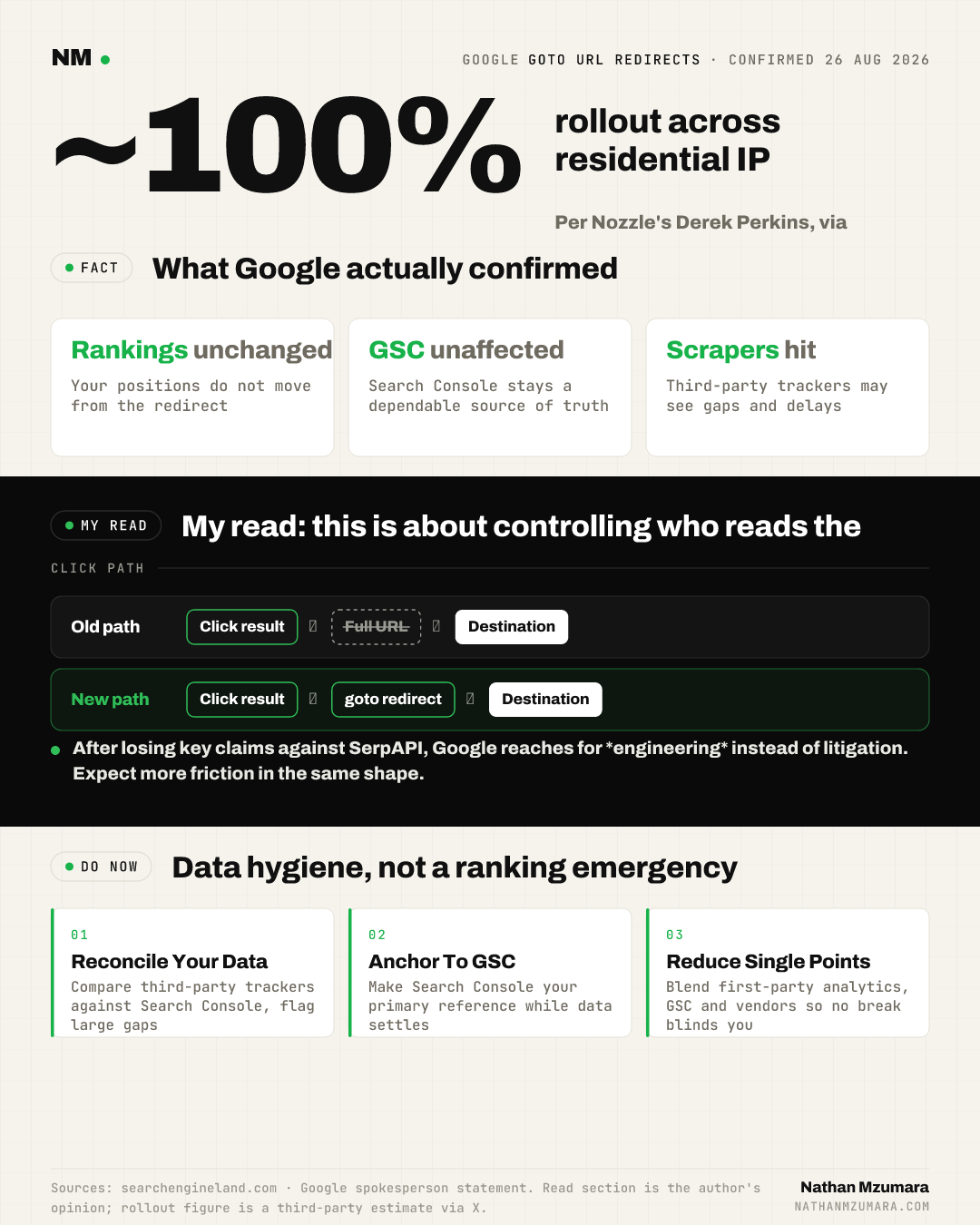
My read: this is not about protecting searchers. It is about controlling who reads the SERP, and you should expect more moves like it.
What are Google goto URL redirects?
Google goto URL redirects are a change to how search result links behave. Before this, clicking a result showed the page's full URL and took you straight there. Now Google inserts a redirect through google.com/goto?url=[hashURL], then passes you to the destination.
Google described the reason in one line. A spokesperson said: "We have a long history of deploying technical measures against evolving forms of abuse, and we regularly take steps to protect our services and users."
Derek Perkins from Nozzle told Search Engine Land on X that Google is at "nearly a 100% rollout across several residential ip providers." Google has been testing this for a couple of months before the wider push.
Why is Google doing this now?
Google says the goto redirect is a technical measure to protect against abuse of its search results. In practice, it makes life harder for third-party tools, scrapers and AI engines that read the raw SERP HTML to pull ranking data.
The timing matters. Google sued SerpAPI over scraping and lost key DMCA claims in that lawsuit. When the courts will not stop scraping, Google reaches for engineering instead. A redirect layer does quietly what a legal filing could not.
This is the pattern to watch. Expect Google to keep adding technical friction to the SERP after the SerpAPI setback, because code is faster and cheaper than litigation.
What does this change for SEO and rank tracking?
The impact on SEO lands hardest on measurement, not on rankings themselves. Your positions in Google do not move because of a goto redirect. What can move is the accuracy and freshness of the data your tools report.
Search Engine Land notes you should assume Google Search Console data is not affected by this change. That gives you one dependable source of truth.
- Third-party rank trackers: Tools that scrape the SERP may see gaps, delays or errors while they adapt to the goto redirect. Watch your dashboards for anything that looks off.
- AI search and SERP APIs: Services that read Google results to feed models or reports face more friction. The redirect adds a step that scrapers must handle.
- Google Search Console: Treat GSC as your primary reference for clicks, impressions and position while third-party data settles.
If your reporting depends on one scraped source, this is a good moment to reduce that single point of failure. I have written before about the single-provider risk when one supplier can cut you off, and the same logic applies to rank data.
Does this affect what searchers see?
From a searcher's point of view, the goto URL redirect has almost no impact. The main change is that you can no longer preview the full destination URL in the browser bar before clicking. Google still shows the URL under the snippet title.
There is one edge case. If a result points to a hacked or phishing page, a redirect layer could add a small risk. Google is generally quick to remove those pages from its results, so the everyday effect is minimal.
What should you do this week?
Treat this as a data hygiene job, not a ranking emergency. The rankings are fine. The measurement needs a check.
- Compare your third-party rank tracker against Google Search Console for the same period. Flag any large gaps.
- Contact your tool providers and ask if they have a plan for the goto redirect. Search Engine Land advises exactly this if your numbers look wrong.
- Anchor core reporting to Google Search Console, which the source says should not be impacted by the change.
- Document any anomaly with dates and screenshots so you can tell a real trend from a tracking glitch.
The bigger job is strategic. Reduce how much of your decision making rests on scraped SERP data alone. Blend first-party analytics, Search Console and vendor tools so no single break can blind you.
Expect more changes like Google goto URL redirects
Google goto URL redirects are the clearest sign yet that Google will use engineering, not just lawsuits, to control who reads its search results. After losing key claims against SerpAPI, Google has every reason to keep tightening the SERP. Watch your tools, lean on Search Console, and expect more measures in the same shape over the coming months.