Marketing Strategy
Meta Verified
Also known as: Facebook Verified, Instagram Verified, verification badge subscription
Meta Verified is a paid subscription from Meta that gives eligible Facebook and Instagram accounts a verified badge along with added protection and support features. Subscribers must confirm their identity and meet Meta's eligibility rules rather than being verified purely on public interest grounds. Meta offers versions for creators and for businesses.
What it is
Meta Verified bundles a blue badge with features such as impersonation monitoring, access to account support and additional profile or promotional tools, with the exact package varying by account type and country. Identity confirmation is part of the process, typically using an official document that matches the account's name. It sits alongside, rather than replacing, Meta's earlier notability based verification.
Why it matters
A badge is a trust signal at the moment someone checks whether a profile is genuine, which matters for brands that suffer from fake accounts and scam pages. Faster access to support can shorten the time it takes to resolve impersonation or account access problems that would otherwise disrupt paid and organic activity. It does not buy reach or ranking, so it should be judged on trust and risk reduction rather than distribution.
How it works
Teams subscribe on the accounts that matter most, usually the main brand profiles and any senior spokespeople, complete identity checks, and then use the impersonation tools to report fake profiles as they appear. Practitioners document who owns the subscription and billing so verification does not lapse during staff changes. Many pair it with consistent naming, linked profiles and a verified account list on the website so customers can check which profiles are official.
When it applies
Consider it when impersonation, scam accounts or customer uncertainty about which profile is official are causing real support or revenue problems, and when you need a faster route to account support.
Examples
- A local clinic subscribes after scam accounts using its name start messaging patients about fake appointments.
- A founder verifies their personal Instagram account so press and partners can tell it from copycat profiles.
- An ecommerce brand lists its verified Facebook and Instagram handles on a contact page so shoppers can confirm official channels.
How it is measured
- Number of impersonation reports filed and removed per month
- Time to resolution for account support and impersonation cases
- Profile visits, follower growth and message volume before and after verification
- Customer service contacts about fake or unofficial accounts
Insights on Meta Verified
Related terms in Marketing Strategy
- Agentic marketingAgentic marketing is the use of AI agents that can plan multi-step work and take actions across marketing tools, rather than only generating text on request. It also covers designing marketing for a world where buyers delegate research and purchasing to their own agents. In practice it is a mix of workflow automation, tool permissions and human review.
- AI searchAI search is the use of large language models to answer a query directly, usually with a written summary rather than a list of links. It covers AI overviews inside traditional search engines and assistants such as ChatGPT, Perplexity, Copilot and Gemini. The visible outcome for a brand is being described and cited inside an answer rather than ranked on a results page.
- AI-generated contentAI-generated content is text, images, audio, video or code produced wholly or mainly by a generative model rather than written or made by a person. It ranges from fully automated output to drafts that a human edits and approves. Its value in marketing depends on editorial control, accuracy and whether it adds anything a reader cannot get elsewhere.
- Audience intelligenceAudience intelligence is the practice of gathering and analysing data about who your audience is, what they care about, and how they search and buy, then turning that into decisions. It combines first party behavioural data with research, search data, social listening, and customer conversations. The output is usually segments, messaging guidance, and content priorities rather than a single report.
- B2B marketingB2B marketing is the practice of promoting products and services to other organisations rather than to individual consumers. It typically involves longer sales cycles, multiple decision makers, higher contract values and a heavier reliance on content, sales enablement and relationships. Success is usually measured through pipeline and revenue contribution rather than immediate transactions.
- Brand voiceBrand voice is the consistent personality and language a brand uses across every channel, covering vocabulary, tone, sentence rhythm and the things it will and will not say. It is documented in guidelines so different writers, agencies and AI tools produce work that sounds like the same organisation. Voice stays stable while tone flexes with context.
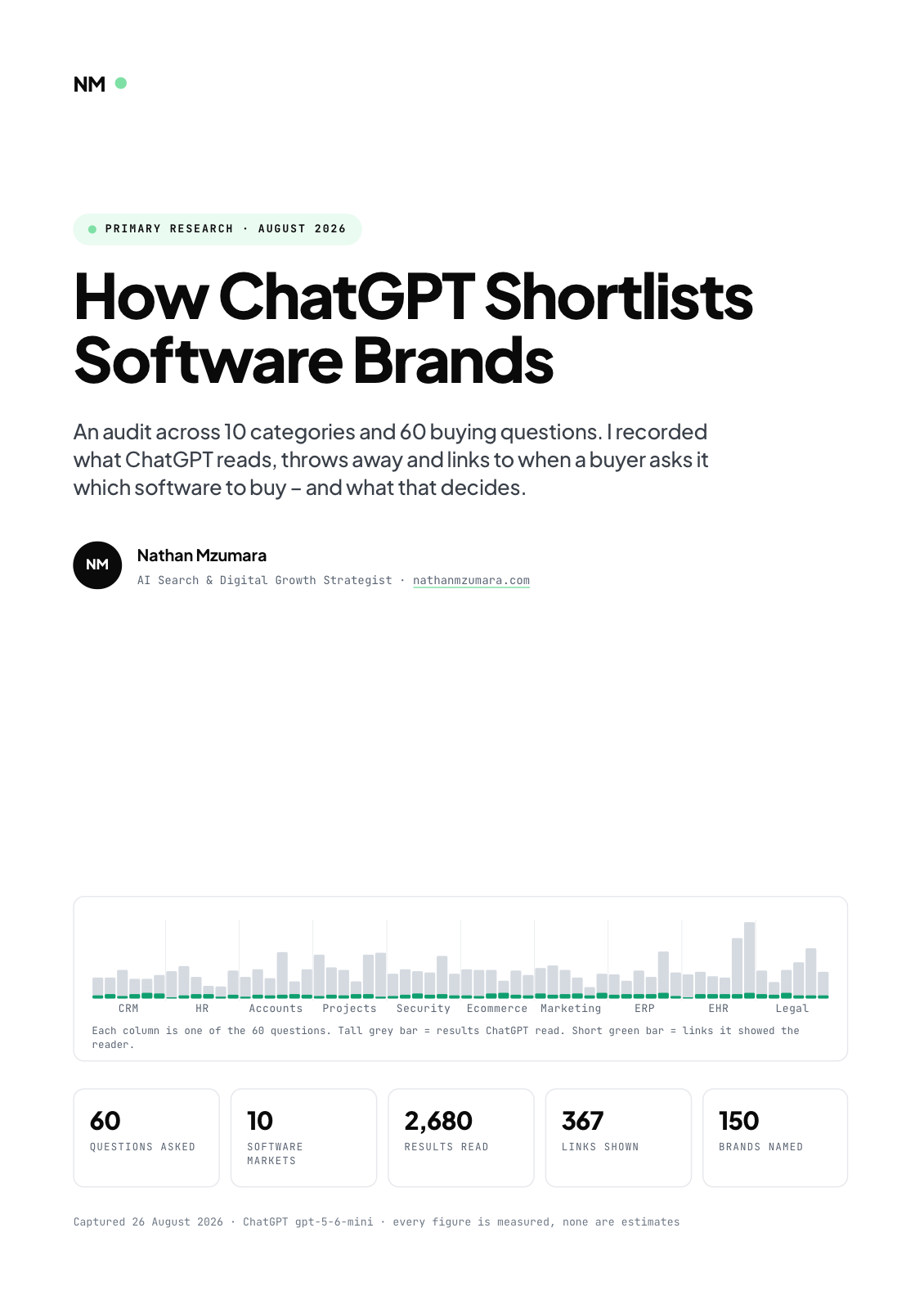
Primary research · August 2026
How ChatGPT Shortlists Software Brands
An audit across 10 categories and 60 buying questions. I recorded what ChatGPT reads, throws away and links to when a buyer asks it which software to buy, and what that decides.
- 60
- Questions asked
- 10
- Software markets
- 2,680
- Results read
- 367
- Links shown
Free download
Get the full report
35 pages · PDF · 536 KB. Enter your details and it downloads straight away.