Algorithm
Google Search algorithm
Also known as: Google algorithm, Google ranking algorithm
The Google Search algorithm is the collection of ranking and retrieval systems Google uses to find, order and present results for a query. It is not a single formula but many interacting systems that assess content, links, query intent, context and user signals. Google updates these systems continuously, with larger changes announced as core updates.
What it is
The Google Search algorithm covers everything between a query being typed and a results page being rendered: crawling and indexing decisions, candidate retrieval, ranking systems, spam filters and the layout of features such as AI Overviews, images and local packs. Google has described it as a set of ranking systems rather than one algorithm, including long-running components like PageRank and language understanding models. Some systems run at crawl or index time, others at query time.
Why it matters
Organic visibility depends on how these systems interpret a page and the query behind it, so the algorithm sets the practical rules for most search marketing work. Core updates can reorder entire categories of results, which moves traffic, leads and revenue without any change on your own site. Understanding what Google says it rewards, such as useful content produced for people and clear technical access, keeps optimisation work aligned with durable signals rather than short-lived tricks.
How it works
Practitioners track Google's documentation, the Search Status Dashboard and its ranking updates page, then correlate volatility in their own analytics and Search Console data against announced update windows. Day to day work involves making content crawlable and indexable, matching pages to query intent, strengthening topical depth and demonstrable expertise, and removing thin or duplicated pages. Testing is observational rather than exact, so teams rely on segmented reporting, controlled changes and holdout comparisons instead of assuming a single fix.
When it applies
It applies to any page you want to appear in Google's organic results, and to diagnostic work after traffic shifts. It is most actively discussed during announced core and spam updates.
Examples
- A publisher loses 30 per cent of organic sessions during an announced core update and audits which article clusters dropped before rewriting or consolidating them.
- An ecommerce team fixes a robots.txt rule blocking faceted category pages so those pages can be crawled and considered for ranking at all.
- A B2B site adds clear author credentials, source citations and updated data to comparison pages after seeing competitors with stronger topical coverage outrank them.
How it is measured
- Organic clicks and impressions by query cluster and landing page in Search Console
- Average position and share of ranking keywords tracked before and after announced updates
- Indexed page count versus submitted URLs, plus crawl stats and coverage errors
- Organic revenue or qualified leads per page group, to separate ranking loss from intent shifts
Related terms in Algorithm
- Core updateA broad Google algorithm update affecting search rankings sitewide rather than a single feature. Recent core updates (e.g. May 2026) have increasingly favoured intent-aligned content over keyword-optimised content.
- EEATGoogle's quality framework: Experience, Expertise, Authoritativeness, Trustworthiness. EEAT signals are increasingly weighted in both classical ranking and AI Overview source selection.
- Entity salienceEntity salience is a measure of how central an entity is to a piece of content, as opposed to merely being mentioned in it. Natural language processing systems assign a salience score based on signals such as position, frequency, grammatical role and surrounding context. It helps a system decide what a document is actually about.
- Google Spam UpdateA Google Spam Update is a rollout of changes to the systems Google uses to detect and demote content that breaks its spam policies. These updates target things like scaled content abuse, cloaking, hacked pages, link schemes and site reputation abuse rather than general content quality. Sites hit by a spam update usually need to remove the offending practices before they can recover.
- Helpful Content UpdateGoogle's quality-focused update class targeting low-value, AI-generated, or thin content. Successive HCUs have favoured first-hand experience and named expertise over comprehensive but shallow coverage.
- Ranking signalsRanking signals are the inputs a search system uses to decide which results to show and in what order. They include relevance signals from the page and query, quality and authority signals, and context such as location, device and language. Search engines do not publish the full list or the weightings, so practitioners work from documented signals, patents, testing and observed patterns.
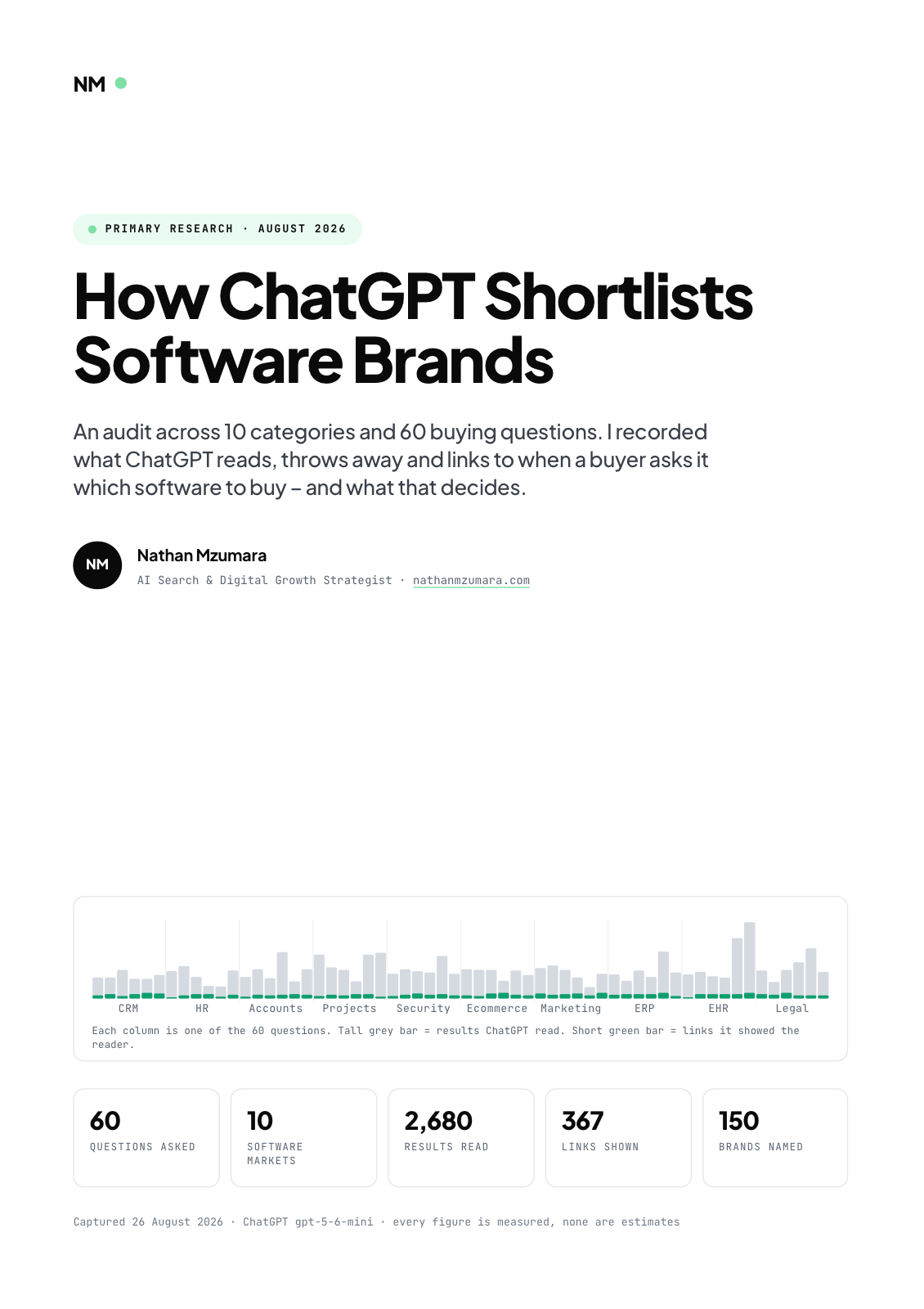
Primary research · August 2026
How ChatGPT Shortlists Software Brands
An audit across 10 categories and 60 buying questions. I recorded what ChatGPT reads, throws away and links to when a buyer asks it which software to buy, and what that decides.
- 60
- Questions asked
- 10
- Software markets
- 2,680
- Results read
- 367
- Links shown
Free download
Get the full report
35 pages · PDF · 536 KB. Enter your details and it downloads straight away.