Structured Data
Feed freshness
Also known as: product feed freshness, feed recency
Feed freshness is how recently a product or data feed has been updated, and how closely the values in it match what is live on your site. A fresh feed reflects current prices, stock levels and product details within minutes or hours rather than days. Stale feeds cause disapprovals, mismatched listings and lost sales.
What it is
A feed is a structured file or API stream that sends product or content data to a platform such as Google Merchant Center, a marketplace, a comparison site or an ad network. Freshness covers both the update cadence of that feed and the accuracy of the attributes inside it, especially price, availability, title and image. It is measured against the live source of truth, usually your product database or website.
Why it matters
Shopping surfaces, retail media and AI answer engines increasingly quote prices and availability directly from feeds, so an out of date value creates a visible mismatch between the listing and the landing page. Platforms treat those mismatches as a trust problem and respond with item disapprovals, suppressed listings or account level warnings. Fresh feeds also let you compete on short lived events such as sales, restocks and clearance.
How it works
Practitioners set an update schedule that matches how fast their catalogue changes, then supplement scheduled fetches with faster paths for volatile attributes. Common patterns include a nightly full feed plus a Content API or supplemental feed for price and stock changes, structured data on product pages that mirrors the feed values, and automated alerts when the two diverge. Monitoring dashboards track last fetch time, item counts and disapproval reasons so problems surface before performance drops.
When it applies
Feed freshness matters most for retailers with frequent price changes, limited stock or fast moving ranges, and for any business syndicating data to multiple platforms. It is a standing operational concern rather than a one off project, and becomes critical during peak trading periods and promotions.
Examples
- A fashion retailer pushes price and availability updates through the Content API every 15 minutes while running a full catalogue feed overnight.
- A grocery brand finds Shopping listings disapproved for price mismatch because the feed was fetched before an overnight promotion started.
- A B2B distributor with 80,000 SKUs adds a supplemental feed for stock status so out of stock lines stop attracting paid clicks.
How it is measured
- Time since last successful feed fetch or upload, by feed
- Percentage of items with price or availability mismatch against the live page
- Item disapproval and warning rate in the merchant platform
- Lag between a catalogue change and the updated value appearing in the listing
Insights on Feed freshness
Related terms in Structured Data
- Content provenanceContent provenance is verifiable information about where a piece of content came from, who created it and how it has been changed, carried with the file or published alongside it. The main open standard is C2PA, shown to people as Content Credentials, which uses cryptographic signing to record capture, edits and any AI involvement. It helps platforms, search systems and readers judge whether an image, video or audio clip is what it claims to be.
- JSON-LDThe recommended syntax for embedding Schema.org structured data on a page. Lightweight, decoupled from page HTML, and increasingly the format LLMs prefer when retrieving structured facts.
- Knowledge graph entityA node in Google's Knowledge Graph representing a real-world thing (person, place, organisation, work). Strong entity signals are prerequisite for Search Profile eligibility and consistent AI Overview attribution.
- Product feedA product feed is a structured file of product data, such as titles, descriptions, prices, availability, identifiers and image links, supplied to shopping channels and platforms. It gives retail surfaces a machine readable source of truth for what you sell. Feeds power Google Shopping listings, Meta catalogues, marketplaces and increasingly AI shopping answers.
- Retrieval-augmented generationA generation approach where an LLM pulls relevant documents at query time and uses them as the source for its answer. The pattern behind most enterprise AI search products and Perplexity-style answer engines.
- Schema.orgThe shared vocabulary for structured-data markup used by Google, Microsoft, and major search engines. As of June 2026, Schema.org publishes monthly aggregate adoption statistics by type.
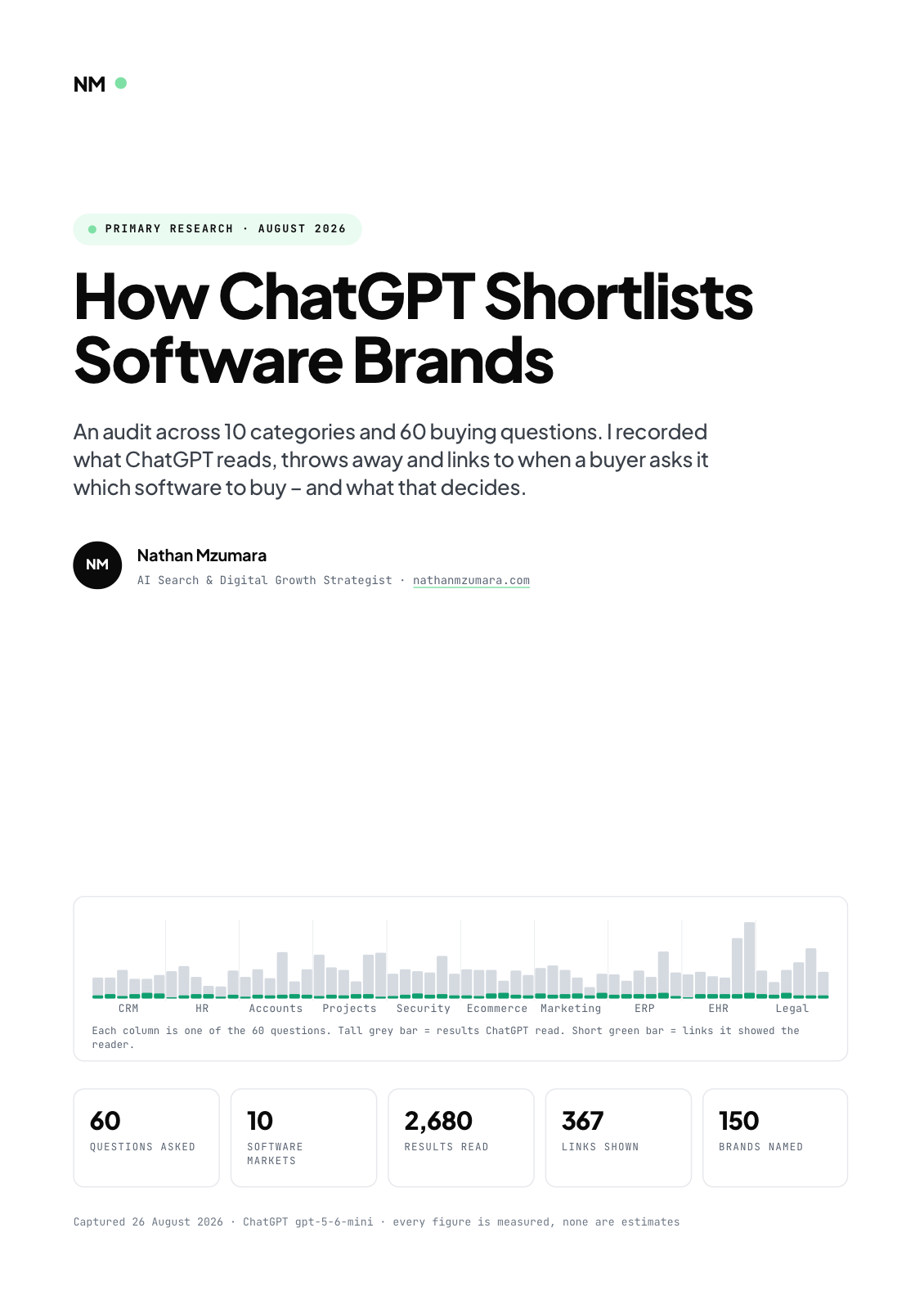
Primary research · August 2026
How ChatGPT Shortlists Software Brands
An audit across 10 categories and 60 buying questions. I recorded what ChatGPT reads, throws away and links to when a buyer asks it which software to buy, and what that decides.
- 60
- Questions asked
- 10
- Software markets
- 2,680
- Results read
- 367
- Links shown
Free download
Get the full report
35 pages · PDF · 536 KB. Enter your details and it downloads straight away.