Analytics & Measurement
Marketing analytics
Also known as: marketing measurement, marketing data analytics
Marketing analytics is the collection, modelling and interpretation of data about marketing activity and its results, used to understand what is working and decide where to invest next. It joins channel data, site behaviour, pipeline and revenue into a view that supports decisions rather than just reporting. It covers descriptive reporting, attribution, experimentation and forecasting.
What it is
Marketing analytics brings together data from advertising platforms, web and app analytics, CRM, email, call tracking and offline sources to measure performance and explain outcomes. It includes both the measurement infrastructure, such as tracking, data pipelines and definitions, and the analysis layer, such as attribution models, incrementality tests and cohort reporting. Good practice treats it as a decision system, not a dashboard exercise.
Why it matters
Budget decisions depend on trustworthy measurement, and without it teams default to whatever channel reports most generously about itself. Analytics is also how you detect change early, including the shift of discovery into AI assistants and zero click surfaces where traditional session data undercounts influence. Clear definitions and consistent reporting make marketing performance legible to finance and the board.
How it works
Practitioners agree a small set of definitions for leads, qualified pipeline and revenue, then build pipelines that land clean data in a warehouse or analytics tool. From there they combine last touch and multi touch reporting with holdout tests, geo experiments and media mix modelling to check what platform reports claim, and they layer in self reported attribution surveys where tracking is weak. Reporting cadences typically split into weekly operational checks and monthly or quarterly strategic reviews.
When it applies
It applies whenever more than one channel competes for budget or whenever a marketing claim needs to be defended with evidence. It is especially important during budget planning, after major tracking or consent changes, and when discovery patterns shift away from measurable clicks.
Examples
- A B2B team adds a self reported attribution field to its demo form and finds that a share of leads crediting organic search first heard about the brand on a podcast.
- An ecommerce brand runs a two week geo holdout on paid social to estimate incremental revenue rather than relying on platform reported conversions.
- A SaaS company builds a warehouse report joining ad spend, trial signups and closed revenue so cost per closed customer is visible by channel.
How it is measured
- Cost per acquisition and customer acquisition cost payback period by channel
- Marketing sourced and marketing influenced pipeline or revenue
- Incremental lift from holdout or geo tests versus platform reported conversions
- Data quality indicators such as unattributed session share and CRM field completeness
Insights on Marketing analytics
Related terms in Analytics & Measurement
- A/B testingA/B testing is a controlled experiment that shows two or more versions of a page, email or feature to randomly split groups of users and compares how each performs against a chosen goal. It isolates the effect of a single change so improvement can be attributed rather than assumed. It is also called split testing.
- AttributionAttribution is the practice of assigning credit for a conversion to the marketing touchpoints that preceded it. It covers the models, rules and data joins used to decide which channels, campaigns or content get counted. In AI search, attribution is harder because many assistant-led journeys leave little or no referral data.
- Click-through rateClick-through rate is the proportion of people who saw something and then clicked it, expressed as clicks divided by impressions. It is used to judge search listings, ads, emails and internal links. A higher rate usually means the message matched what the audience was looking for.
- Consent ModeConsent Mode is a Google framework that lets tags adjust their behaviour based on the consent choices a visitor has made. Instead of tags being blocked outright, they receive signals about whether analytics and advertising storage are allowed, and act accordingly. Version 2 added parameters covering the use of personal data for ads and for ad personalisation.
- Conversion trackingConversion tracking is the practice of recording the actions you care about, such as purchases, form submissions or calls, and connecting them back to the channel, campaign or session that led to them. It gives advertising platforms and analytics tools the outcome data they need to report performance and optimise bidding. Accuracy depends on correct tag implementation, consent handling and clear conversion definitions.
- Cross-channel reportingCross-channel reporting is the practice of bringing performance data from search, social, email, paid media, AI assistants and other channels into a single view. It standardises metrics and time periods so channels can be compared fairly rather than judged in isolated platform dashboards. The aim is to show how channels work together to produce enquiries, sales and revenue.
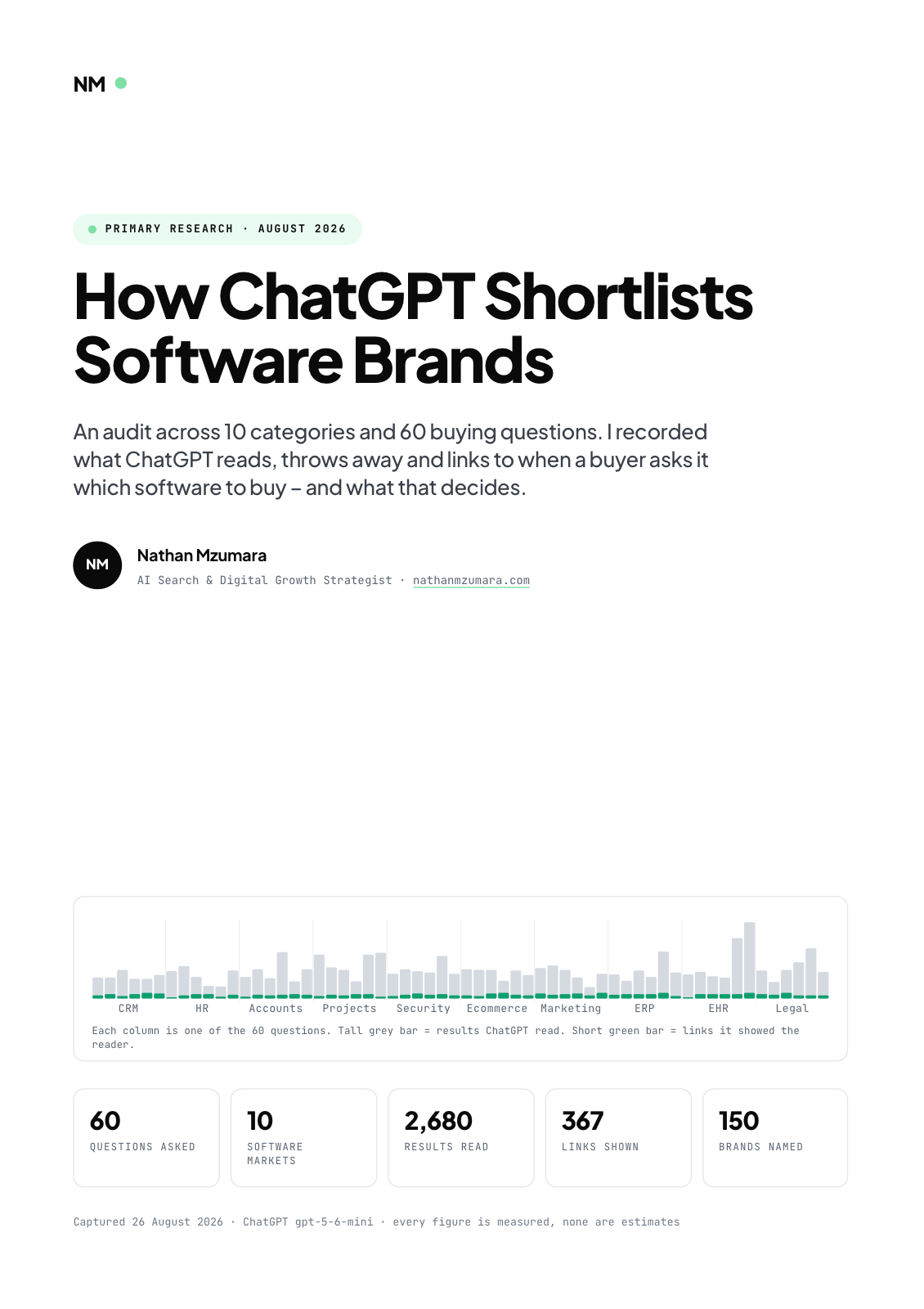
Primary research · August 2026
How ChatGPT Shortlists Software Brands
An audit across 10 categories and 60 buying questions. I recorded what ChatGPT reads, throws away and links to when a buyer asks it which software to buy, and what that decides.
- 60
- Questions asked
- 10
- Software markets
- 2,680
- Results read
- 367
- Links shown
Free download
Get the full report
35 pages · PDF · 536 KB. Enter your details and it downloads straight away.