Analytics & Measurement
Cross-channel reporting
Also known as: multi-channel reporting
Cross-channel reporting is the practice of bringing performance data from search, social, email, paid media, AI assistants and other channels into a single view. It standardises metrics and time periods so channels can be compared fairly rather than judged in isolated platform dashboards. The aim is to show how channels work together to produce enquiries, sales and revenue.
What it is
Cross-channel reporting, also called multi-channel reporting, combines data from every marketing and discovery channel into one consistent set of dimensions and metrics. It usually involves consistent campaign tagging, a shared definition of a conversion, and a reporting layer such as a warehouse, BI tool or analytics platform. It is a reporting discipline as much as a technology choice.
Why it matters
Discovery rarely happens in one place. Someone may see a social post, read a comparison article, ask an AI assistant for options and then search for the brand by name, and each platform will claim credit for whatever it can see. A cross-channel view reduces double counting, exposes channels that assist rather than close, and gives budget decisions a defensible basis.
How it works
Practitioners agree a naming convention for campaigns and links, pull platform data through APIs or connectors into a central store, then model it against orders or CRM records. Many teams pair last-click or data-driven attribution with incrementality tests and self-reported attribution questions, because AI assistants and dark social traffic often arrive with little or no referrer data. Reports are then built for a decision, such as monthly budget allocation, rather than as a dump of every available metric.
When it applies
It applies once a brand is active on more than two or three channels, or whenever budget decisions depend on comparing channels. It becomes essential when leadership asks which activity actually drove revenue.
Examples
- A DTC retailer blends Shopify orders with paid search, paid social and email data to see true blended cost per acquisition each week.
- A B2B software firm joins ad platform spend to closed-won deals in its CRM, so pipeline value rather than form fills becomes the reported outcome.
- A services business adds a 'how did you hear about us' field to its enquiry form and reports those answers beside analytics data to capture AI assistant and word of mouth referrals.
How it is measured
- Blended customer acquisition cost across all channels
- Share of conversions where analytics source is direct, unassigned or unknown
- Assisted conversions and path length by channel
- Variance between platform-reported conversions and CRM or order data
Insights on Cross-channel reporting
Related terms in Analytics & Measurement
- A/B testingA/B testing is a controlled experiment that shows two or more versions of a page, email or feature to randomly split groups of users and compares how each performs against a chosen goal. It isolates the effect of a single change so improvement can be attributed rather than assumed. It is also called split testing.
- AttributionAttribution is the practice of assigning credit for a conversion to the marketing touchpoints that preceded it. It covers the models, rules and data joins used to decide which channels, campaigns or content get counted. In AI search, attribution is harder because many assistant-led journeys leave little or no referral data.
- Click-through rateClick-through rate is the proportion of people who saw something and then clicked it, expressed as clicks divided by impressions. It is used to judge search listings, ads, emails and internal links. A higher rate usually means the message matched what the audience was looking for.
- Consent ModeConsent Mode is a Google framework that lets tags adjust their behaviour based on the consent choices a visitor has made. Instead of tags being blocked outright, they receive signals about whether analytics and advertising storage are allowed, and act accordingly. Version 2 added parameters covering the use of personal data for ads and for ad personalisation.
- Conversion trackingConversion tracking is the practice of recording the actions you care about, such as purchases, form submissions or calls, and connecting them back to the channel, campaign or session that led to them. It gives advertising platforms and analytics tools the outcome data they need to report performance and optimise bidding. Accuracy depends on correct tag implementation, consent handling and clear conversion definitions.
- Customer lifetime valueCustomer lifetime value (CLV or LTV) is the total profit or revenue a business expects to earn from a customer relationship over its lifetime. It combines purchase value, purchase frequency, margin, and retention into a single forward looking figure. Teams use it to decide how much they can afford to spend acquiring and keeping customers.
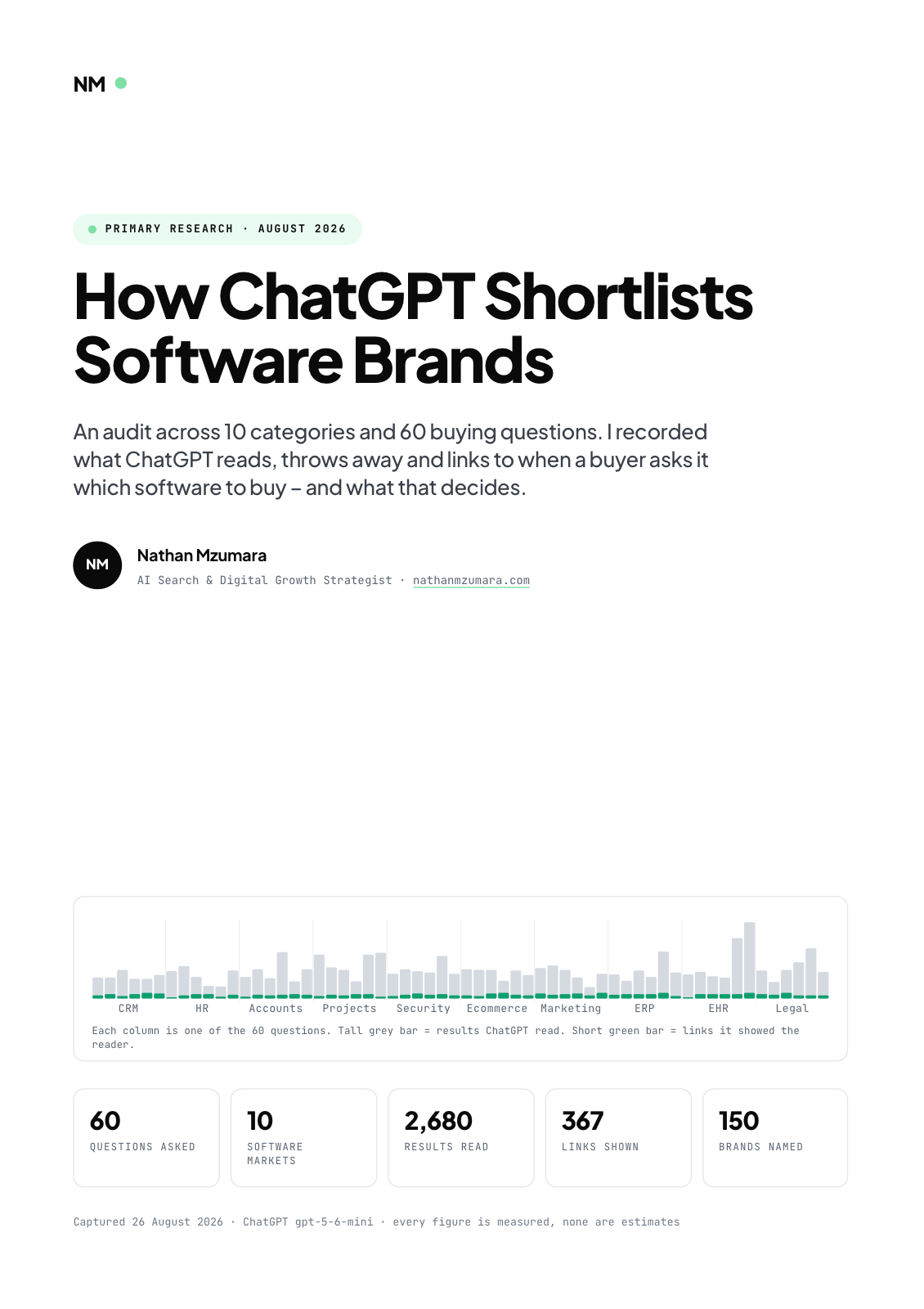
Primary research · August 2026
How ChatGPT Shortlists Software Brands
An audit across 10 categories and 60 buying questions. I recorded what ChatGPT reads, throws away and links to when a buyer asks it which software to buy, and what that decides.
- 60
- Questions asked
- 10
- Software markets
- 2,680
- Results read
- 367
- Links shown
Free download
Get the full report
35 pages · PDF · 536 KB. Enter your details and it downloads straight away.