Analytics & Measurement
Geo incrementality
Also known as: geo incrementality testing, geo lift, geo experiments
Geo incrementality is the practice of measuring the causal effect of media by changing activity in some geographic areas and comparing outcomes with matched areas where nothing changed. Because regions rather than people are randomised, it works with aggregate data and needs no user-level tracking. The output is an incremental lift, often expressed as incremental revenue, conversions or cost per incremental acquisition.
What it is
Regions such as cities, postcode areas, states or media markets are assigned to test and control groups. One group receives a media change: switched off, switched on, or spend raised or lowered. The difference in outcomes between the groups, adjusted for pre-period differences, is the estimate of incrementality.
Why it matters
Platform reported conversions include demand that would have arrived anyway, so they can overstate the value of some channels. Geo tests give a privacy safe estimate that works consistently across search, social, video, audio, out of home and retail media. They are also the standard evidence used to calibrate mix models and to settle internal disputes about channel value.
How it works
Teams choose balanced region groups from historical outcome data, calculate the minimum detectable effect for the proposed budget and duration, then run the change while keeping control areas uncontaminated. Analysis uses difference in differences, matched market or synthetic control methods, and results are reported as lift with a confidence interval alongside an incremental cost per acquisition.
When it applies
It applies when a channel can be targeted by geography, regional outcome data exists, and the business can tolerate a holdout long enough to detect the effect, usually several weeks.
Examples
- Turning off brand search in a third of regions for four weeks to see how much of that traffic arrives through organic instead.
- Running an out of home campaign in three cities only and comparing store visits with matched cities.
- Increasing retail media spend by thirty per cent in selected regions to estimate marginal return before a national rollout.
How it is measured
- Incremental lift percentage with its confidence interval
- Incremental cost per acquisition or incremental return on ad spend
- Pre-period fit between test and control regions
- Minimum detectable effect achieved versus planned
Insights on Geo incrementality
Related terms in Analytics & Measurement
- A/B testingA/B testing is a controlled experiment that shows two or more versions of a page, email or feature to randomly split groups of users and compares how each performs against a chosen goal. It isolates the effect of a single change so improvement can be attributed rather than assumed. It is also called split testing.
- AI cost per taskAI cost per task is the total cost of completing one unit of useful work with an AI system, divided by the number of tasks completed to an acceptable standard. It includes model tokens, tool and retrieval calls, retries, and any human review needed before the output can be used. It is the unit economics measure behind an AI workflow.
- AttributionAttribution is the practice of assigning credit for a conversion to the marketing touchpoints that preceded it. It covers the models, rules and data joins used to decide which channels, campaigns or content get counted. In AI search, attribution is harder because many assistant-led journeys leave little or no referral data.
- Click-through rateClick-through rate is the proportion of people who saw something and then clicked it, expressed as clicks divided by impressions. It is used to judge search listings, ads, emails and internal links. A higher rate usually means the message matched what the audience was looking for.
- Consent ModeConsent Mode is a Google framework that lets tags adjust their behaviour based on the consent choices a visitor has made. Instead of tags being blocked outright, they receive signals about whether analytics and advertising storage are allowed, and act accordingly. Version 2 added parameters covering the use of personal data for ads and for ad personalisation.
- Conversion trackingConversion tracking is the practice of recording the actions you care about, such as purchases, form submissions or calls, and connecting them back to the channel, campaign or session that led to them. It gives advertising platforms and analytics tools the outcome data they need to report performance and optimise bidding. Accuracy depends on correct tag implementation, consent handling and clear conversion definitions.
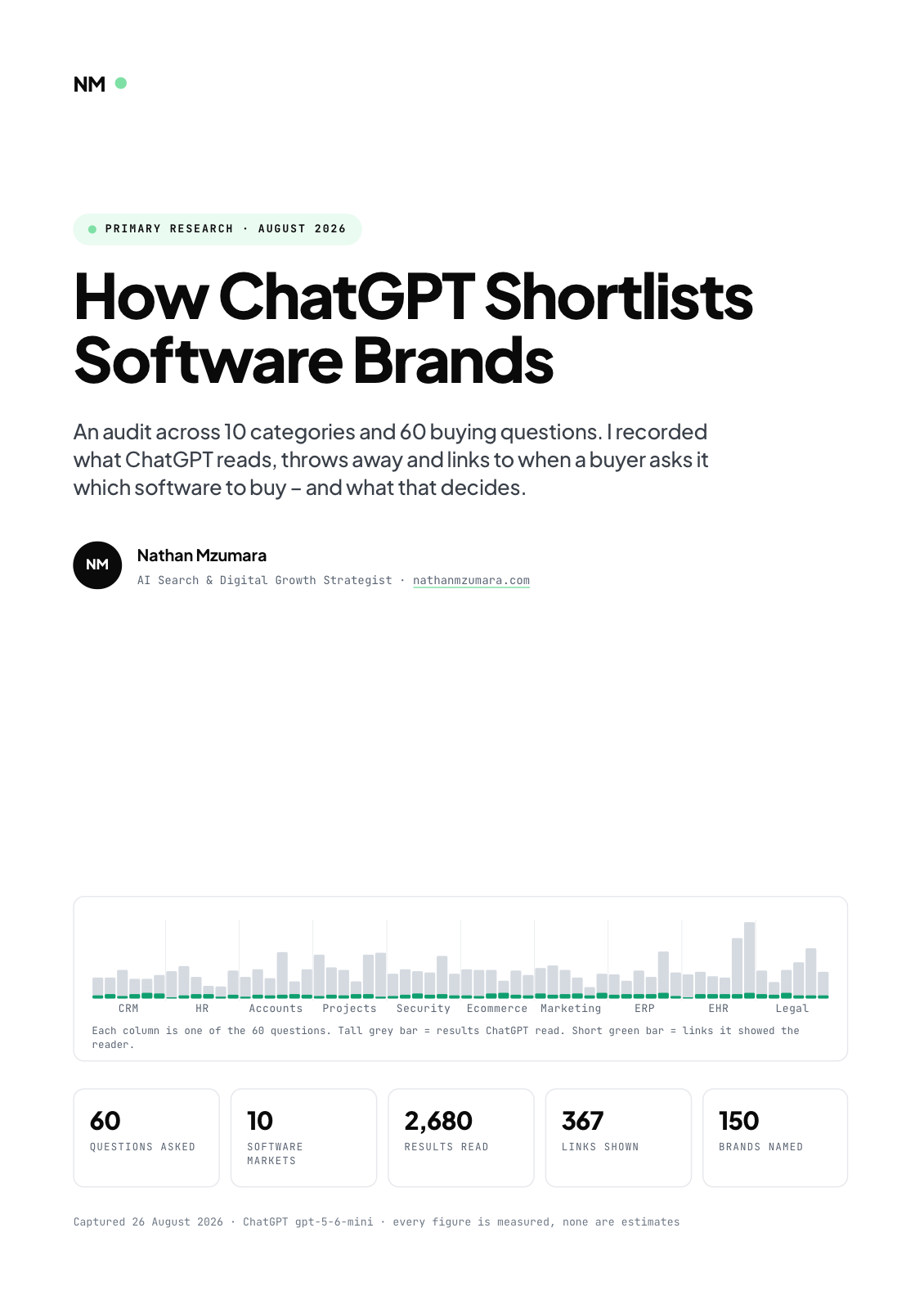
Primary research · August 2026
How ChatGPT Shortlists Software Brands
An audit across 10 categories and 60 buying questions. I recorded what ChatGPT reads, throws away and links to when a buyer asks it which software to buy, and what that decides.
- 60
- Questions asked
- 10
- Software markets
- 2,680
- Results read
- 367
- Links shown
Free download
Get the full report
35 pages · PDF · 536 KB. Enter your details and it downloads straight away.