Search Tactic
Citation-worthy content
Content with the qualities LLMs select for when synthesising an answer: a single, defensible claim per paragraph; named entities; first-hand evidence; and a clear authority signal.
What it is
Citation worthy content has the qualities language models select for when synthesising an answer: a single defensible claim per paragraph, named entities, first hand evidence, and a clear authority signal. It earns the citation by being the most quotable and trustworthy source on a point.
Why it matters
When a model chooses which source to credit, these signals tip the decision, so citation worthiness directly drives AI visibility and attributed referrals. It also builds durable authority that compounds across answer surfaces.
How it works
Make one defensible point per paragraph, support it with original data or first hand experience, name the people and organisations involved, and surface credentials that establish authority. Replace borrowed claims with evidence only you can provide.
When it applies
It applies most to content competing to be the named source on contested or high value topics.
Examples
- A practitioner writes from direct experiment results that no aggregator can replicate, and engines cite the original.
- An analyst attributes each claim to a named study, making the paragraph safe to quote.
- An author byline with verifiable expertise raises the page above anonymous competitors for a sensitive query.
How it is measured
- Number of attributed citations across AI answers
- Proportion of citations linking to first hand or original content
- Author or domain authority signals associated with cited pages
- Growth in referrals from answer surfaces over time
Related terms in Search Tactic
- Agentic researchAgentic research is the use of an AI system that plans and carries out a multi-step research task on its own, running many searches, opening and reading sources, then writing a synthesised answer or report with citations. It differs from a single search query because the model decides what to look up next based on what it has already found. Vendors often market this capability as deep research.
- Answer Engine OptimisationThe practice of structuring content so it can be lifted directly into AI answers. Close cousin of GEO; emphasises clean, parseable facts and unambiguous attribution.
- Content auditA content audit is a structured review of every page or asset in a content set, scored against performance, quality, accuracy and search intent. The output is a decision for each item: keep, improve, consolidate, redirect or remove. It turns a large and uneven content library into a prioritised action plan.
- Crawler policyA crawler policy is the set of rules a site publishes and enforces to decide which automated agents may access its content, how often, and for what purpose. It typically combines robots.txt directives, server side rules and terms of use, and increasingly distinguishes search crawlers from AI training and assistant crawlers. The policy defines both what is allowed and what happens when a bot ignores it.
- Digital discoveryThe full set of channels through which people find brands, products, and answers, search engines, AI assistants, social platforms, marketplaces, and agentic browsers. Replaces the narrower frame of just “SEO”.
- Ecommerce SEOEcommerce SEO is the practice of making an online store's category, product, brand and editorial pages discoverable in organic search. It combines technical work on crawling, indexing and site structure with commercial decisions about which queries each page should serve. The goal is qualified non-paid traffic that converts into orders.
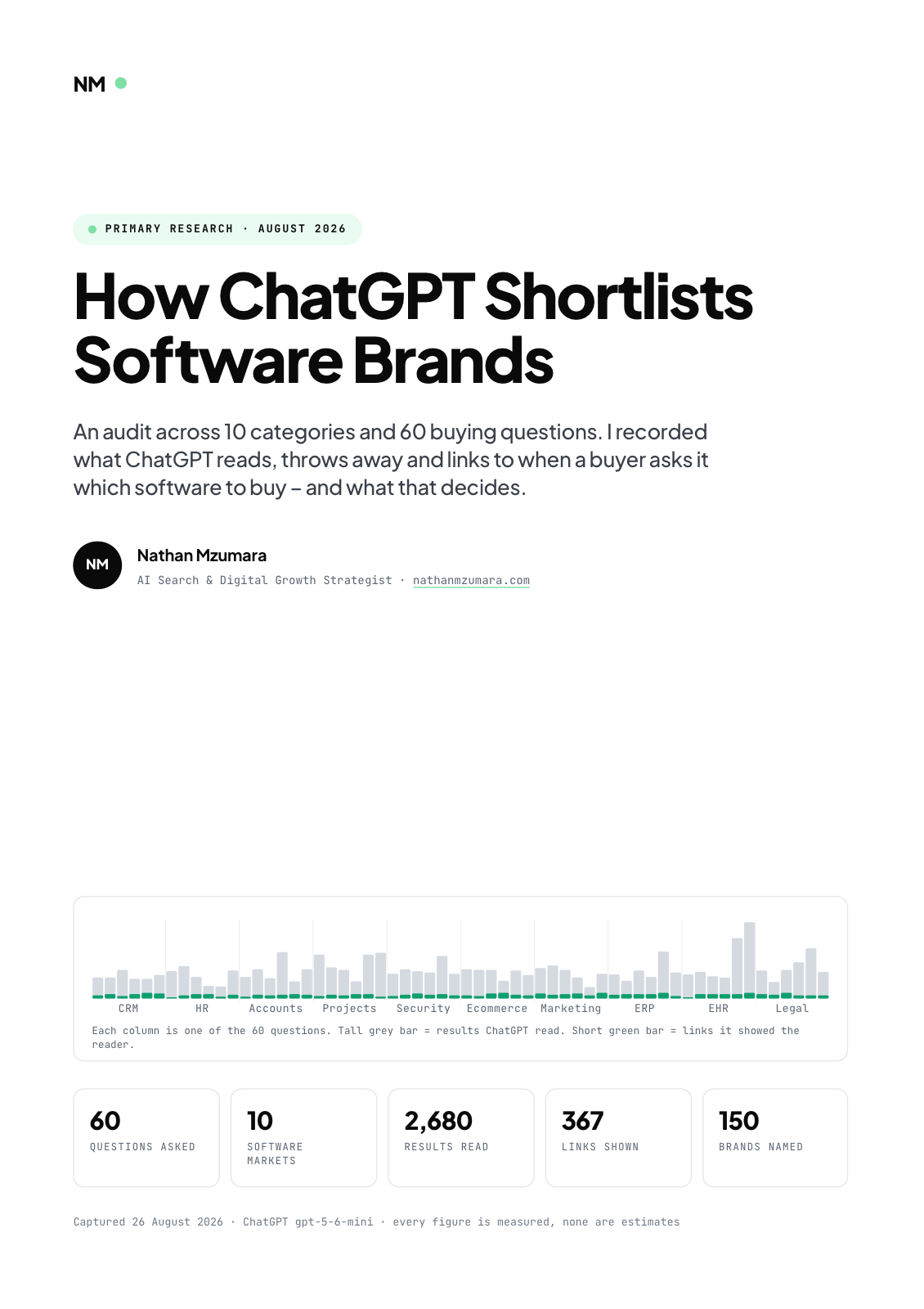
Primary research · August 2026
How ChatGPT Shortlists Software Brands
An audit across 10 categories and 60 buying questions. I recorded what ChatGPT reads, throws away and links to when a buyer asks it which software to buy, and what that decides.
- 60
- Questions asked
- 10
- Software markets
- 2,680
- Results read
- 367
- Links shown
Free download
Get the full report
35 pages · PDF · 536 KB. Enter your details and it downloads straight away.