Regulation & Policy
AI transparency
Also known as: model transparency, AI disclosure
AI transparency is the practice of making clear how an AI system works, what sits behind it, and when content or an interaction involves AI. It covers regulatory disclosure duties as well as voluntary explanations such as model cards, labels on synthetic media and citations in AI generated answers. For publishers and marketers it sets expectations about when AI involvement should be declared and how clearly.
What it is
AI transparency describes the information an organisation publishes about the AI systems it builds, buys or relies on, including intended uses, known limits, data handling and human oversight. On the consumer side it also means visible signals: a label on an AI generated image, a note that a chatbot is automated, or links to the sources behind a generated answer. It sits alongside related ideas such as explainability and accountability, but focuses on what is disclosed rather than how the model reasons.
Why it matters
Discovery increasingly runs through systems that summarise rather than list, so transparency is what lets a brand see whether its content was used and credited. Assistants that cite sources pass attribution and sometimes traffic back to publishers, while unlabelled synthetic content erodes trust in a category. Transparency duties in the EU AI Act, including disclosure when people interact with an AI system and marking of synthetic content, also make this a compliance question rather than a stylistic choice.
How it works
Providers publish model or system cards, usage policies and evaluation summaries; deployers add user facing disclosure, such as a chatbot introduction or an editorial note on AI assisted articles. Teams keep an internal register of AI tools used in content production, record who reviewed what, and preserve provenance metadata on generated media so downstream platforms can label it. Many organisations also document how AI features draw on their own content so they can explain answers to customers and regulators.
When it applies
It applies whenever you publish AI assisted or AI generated material, deploy conversational interfaces, or use AI to rank, personalise or recommend. Duties are strongest in the EU and in regulated sectors, but platform policies on synthetic media apply almost everywhere.
Examples
- A publisher adds a short standing note explaining that some drafts are AI assisted and reviewed by a named editor before publication.
- A brand's support chatbot opens by stating it is an automated assistant and offers an immediate route to a human agent.
- A model provider publishes a system card setting out intended uses, known failure modes and evaluation results for its latest release.
How it is measured
- Share of published pages and assets carrying a clear AI use disclosure.
- Proportion of AI assistant answers about your brand that cite a source you control.
- Completeness of the internal AI tool register, measured as tools documented against tools in active use.
- Volume of customer complaints or support tickets citing unclear or undisclosed AI involvement.
Insights on AI transparency
Related terms in Regulation & Policy
- AI complianceAI compliance is the work of making sure AI systems meet the laws, regulations, standards and internal policies that apply to them. It spans data protection, transparency, risk classification, documentation, human oversight and record keeping across the life of a system. In practice it combines legal interpretation, engineering controls and ongoing evidence gathering.
- AI governanceAI governance is the set of policies, roles, controls and review processes an organisation uses to manage how AI systems are built, bought and used. It covers risk assessment, documentation, human oversight, data handling and accountability. It applies both to AI a company develops and to third-party AI tools used by staff.
- AI privacyAI privacy is the set of practices, rights and obligations that govern how personal data is collected, used, stored and exposed when building or using AI systems. It covers training data, prompts and outputs, retention by AI vendors, and the transparency and control offered to the people whose data is involved. For marketing teams it shapes what customer data can safely be put into AI tools and what must be disclosed.
- AI safetyAI safety is the practice of designing, testing and operating AI systems so they cause less harm, behave predictably and resist misuse. It covers alignment with intended behaviour, evaluation and red teaming, content guardrails, and monitoring once a system is live. For marketers it shapes what models will say, how assistants handle brands, and what compliance teams expect before AI tools go into production.
- Competition and Markets AuthorityThe Competition and Markets Authority (CMA) is the United Kingdom's competition and consumer protection regulator. It investigates mergers, anti-competitive conduct and market practices, and it holds specific powers over large digital firms under the Digital Markets, Competition and Consumers Act 2024. Its decisions shape how search engines, app stores and AI assistants operate in the UK market.
- Content licensingContent licensing is the practice of granting an AI company or platform permission to use your published material, usually for model training, retrieval or display inside an assistant, in return for payment or other terms. Deals set out what content is covered, how it can be used, how it is attributed and for how long. It is the commercial alternative to relying only on crawler blocking or copyright enforcement.
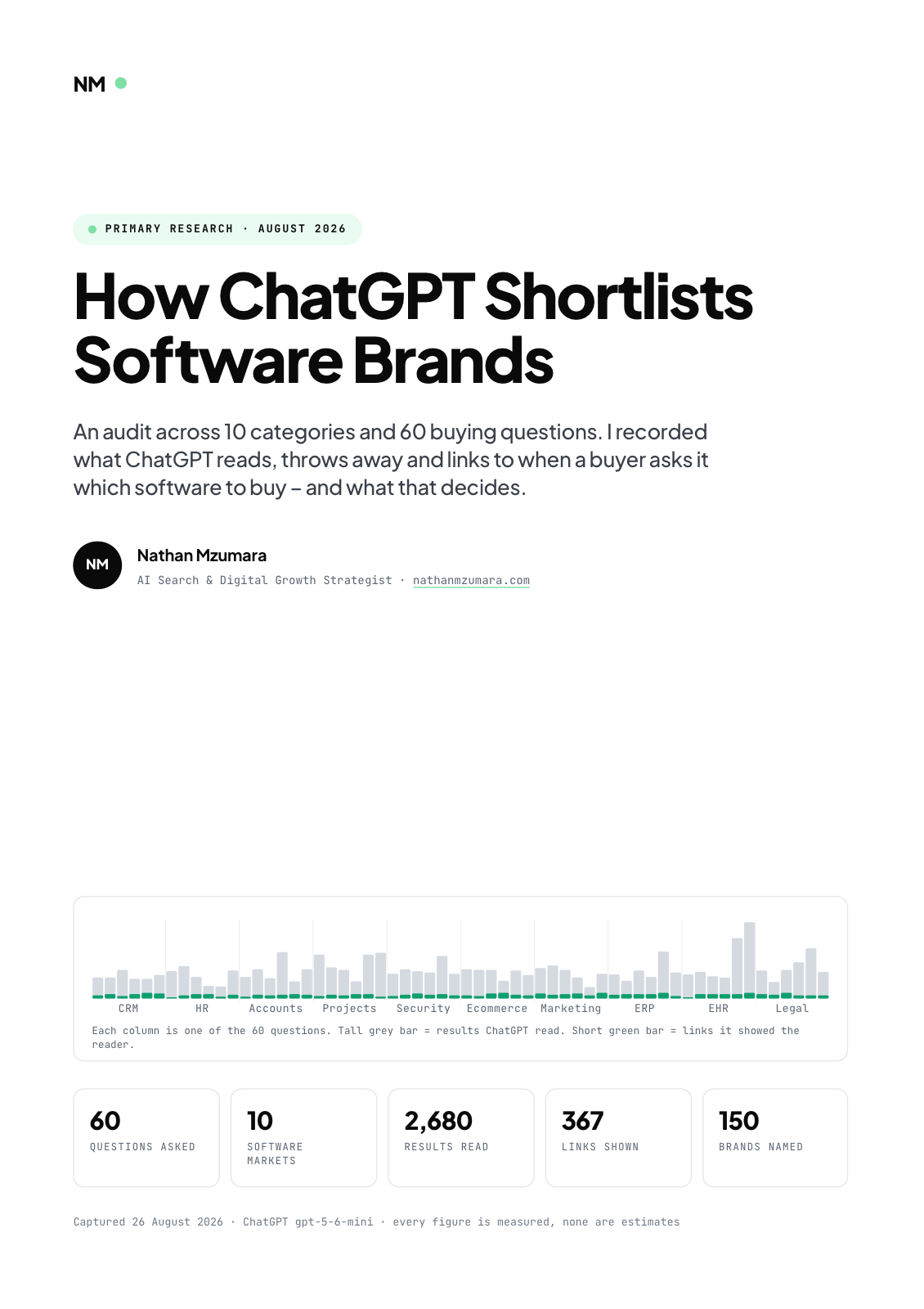
Primary research · August 2026
How ChatGPT Shortlists Software Brands
An audit across 10 categories and 60 buying questions. I recorded what ChatGPT reads, throws away and links to when a buyer asks it which software to buy, and what that decides.
- 60
- Questions asked
- 10
- Software markets
- 2,680
- Results read
- 367
- Links shown
Free download
Get the full report
35 pages · PDF · 536 KB. Enter your details and it downloads straight away.