Issue 07. The week Anthropic rebuilt its safety layer and Google quietly upgraded two measurement tools
TL;DR
A lot landed on Monday the 30th of June. Anthropic shipped three things in one day, Google Analytics got smarter without anyone asking it to, and Google Trends added a comparison feature that should change how you read demand signals. Here is what matters and what to do about it.
Claude Fable 5 returns globally after export control lift, with a new safety classifier in place

- What
- Claude Fable 5 and Mythos 5 were pulled on 12 June 2026 after the US government applied export controls following a report that Amazon researchers had found a method of bypassing Fable 5's safeguards, specifically prompting it to identify software vulnerabilities and, in one case, produce exploit code. Anthropic has since trained a new safety classifier that blocks the reported technique in over 99% of cases, verified by NIST's Center for AI Standards and Innovation (CAISI). The export controls were lifted on 30 June; Fable 5 access restored globally on 1 July 2026. On paid plans (Pro, Max, Team, select Enterprise), Fable 5 is included for up to 50% of weekly usage limits through 7 July, after which it moves to usage credits. AWS, Google Cloud, and Microsoft Foundry access is being restored as quickly as possible. Mythos 5 remains restricted to approved US organisations under the Glasswing programme.
- When
- Export controls applied 12 June 2026. Lift announced 30 June 2026. Global access restored 1 July 2026. Usage-limit window runs through 7 July 2026.
- How it shifts discovery
- If your team uses Fable 5 for research, content drafting, or agentic workflows, access is back but the new classifier will occasionally block requests it considers borderline, including some routine coding and debugging tasks. Those blocked requests are automatically rerouted to Opus 4.8. The practical implication: if a Fable 5 request silently returns a different model's response, that is the classifier firing, not a bug. Review any automated pipelines that depend on Fable 5 for consistent output. The broader story here is structural: Anthropic, Amazon, Microsoft, Google, and other Glasswing partners are now developing a shared industry framework for classifying jailbreak severity. That will shape how capable models are governed going forward, and is worth tracking if you advise clients on AI risk.
- Questions to ask
- Do any of our current Claude-powered workflows depend on Fable 5 specifically, and have we tested them against the new classifier to check for false-positive blocks?
- If Fable 5 requests are silently rerouted to Opus 4.8, how will we detect that in production and account for the output difference?
- What is our contingency if a future export control event suspends access again with no notice?
- Sources
Claude Sonnet 5 launches as the new default model, matching near-Opus performance at Sonnet pricing

- What
- Anthropic launched Claude Sonnet 5 on 30 June 2026 as its most capable mid-tier model to date. It closes a significant gap on Opus 4.8 in agentic tasks including reasoning, tool use, coding, and knowledge work, while remaining substantially cheaper. Introductory pricing through 31 August 2026 is $2 per million input tokens and $10 per million output tokens via the API, rising to $3 and $15 respectively from 1 September. Opus 4.8 is priced at $5 and $25. Sonnet 5 is the new default for Free and Pro plans and is available across Max, Team, Enterprise, Claude Code, and the Claude Platform. It also scores lower on cybersecurity task capability than current Opus models, which is relevant for teams operating under compliance requirements.
- When
- Launched 30 June 2026. Introductory pricing in effect through 31 August 2026.
- How it shifts discovery
- For growth and SEO teams using Claude in agentic workflows, such as automated brief generation, content audits, or multi-step research pipelines, Sonnet 5 is the most cost-efficient upgrade available right now. Early partners report it completes multi-step tasks where previous Sonnet models stalled. The BrowseComp and OSWorld-Verified benchmarks show it outperforms Sonnet 4.6 across effort levels and matches Opus 4.8 on some tasks at higher effort. If you are currently paying Opus 4.8 rates for tasks that do not require its full capability, switching to Sonnet 5 before 1 September locks in the introductory rate. Run your standard eval suite on Sonnet 5 now and compare outputs before committing.
- Questions to ask
- Which of our current Opus 4.8 workflows could run on Sonnet 5 without meaningful quality loss, and what would that save us per month at current volume?
- Have we tested Sonnet 5 on our specific agentic tasks rather than relying on benchmarks alone?
- Does the lower cybersecurity capability score affect any of our compliance or security research use cases?
- Sources
Google Analytics adds unprompted AI Overview cards that surface traffic shifts automatically
- What
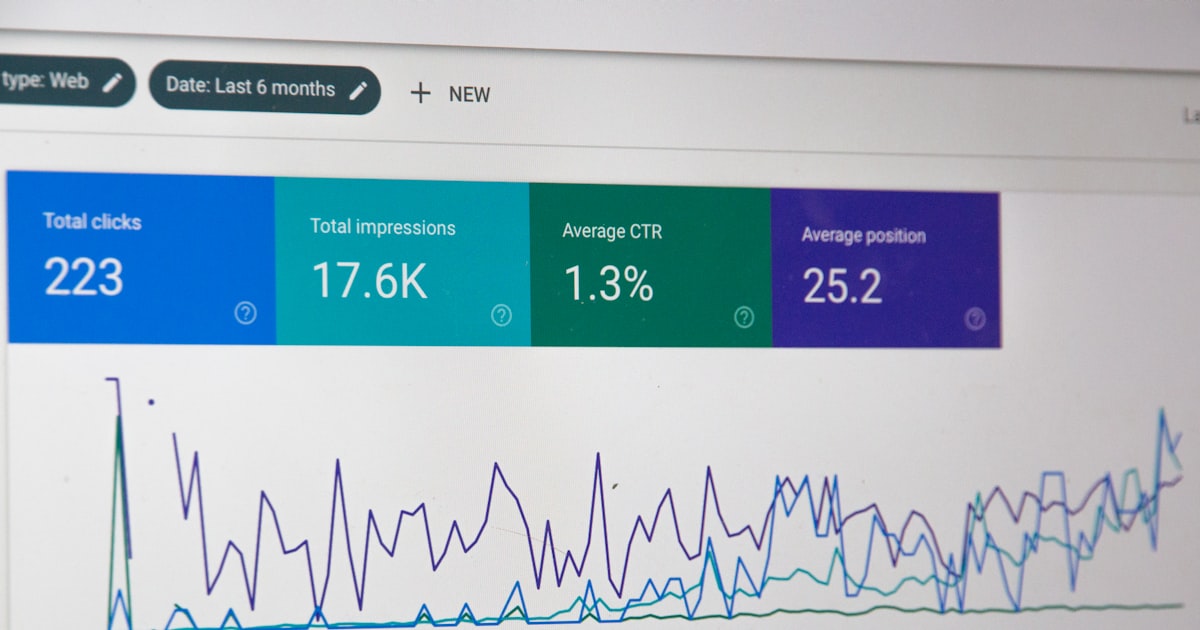
- Google Analytics announced AI Overviews cards on 30 June 2026. These are proactive insight cards that appear at the top of the Analytics home page and surface the most important changes since your last visit, covering traffic shifts, seasonal trends, and setup alerts, without requiring a manual prompt or query. A single click expands any card for deeper analysis.
- When
- Announced 30 June 2026. Rolling out to GA4 accounts; check the top of your home page.
- How it shifts discovery
- This matters because the most common reason teams miss early traffic drops is that no one was looking at the right report at the right time. An unprompted card that flags a meaningful organic traffic shift closes that gap. The catch, noted pointedly by Jess Joyce in the announcement thread, is that these AI Overview cards do not yet track traffic coming from Google's own AI Overviews in search results. That is a real gap. The feature helps you see that something changed; it still does not tell you whether AI Overviews in the SERP are cannibalising your clicks. Keep your separate chatbot and AI referral tracking in place alongside this. Treat the cards as an early warning system, not a full attribution solution.
- Questions to ask
- Are the AI Overview cards in our GA4 accounts active yet, and have we checked whether their traffic-shift alerts match what our manual monitoring has been catching?
- What is our current process for detecting organic traffic drops, and does this feature replace or complement it?
- When Google does add AI Overview referral tracking inside GA4, what will we need to change in our reporting structure?
- Sources
Google Trends adds period-over-period comparison chips for MoM, WoW, and YoY overlays

- What
- Google Trends has added comparison chips that let you overlay month-over-month, week-over-week, and year-over-year demand data directly inside the Trends interface. Previously, comparing periods required exporting data and doing the comparison manually or in a separate tool.
- When
- Spotted and reported 30 June 2026. Available in the Google Trends interface now.
- How it shifts discovery
- For keyword strategy and content planning, this removes a friction point. You can now see at a glance whether a spike in search demand for a topic is genuinely new interest or a recurring seasonal pattern, inside Trends rather than in a spreadsheet. The practical use case is seasonality validation before you commission or prioritise content. Before briefing a piece targeting a trending term, pull the YoY overlay to confirm whether you are chasing a durable trend or a calendar-driven blip. It also makes demand briefings easier to present to stakeholders who are not comfortable exporting CSVs.
- Questions to ask
- Are we currently using Google Trends for demand validation before content commissioning, and does this feature change our workflow?
- Which of our priority topic clusters have seasonal demand patterns we have not formally mapped yet?
- How do we incorporate Trends period-over-period data into our content calendar and editorial prioritisation process?
- Sources
Claude Science launches in beta: an auditable AI workbench for scientific research
- What
- Anthropic launched Claude Science on 30 June 2026, a domain-specific AI workbench aimed at scientific researchers. It integrates over 60 pre-configured skills and connectors for genomics, proteomics, structural biology, cheminformatics, and single-cell analysis, alongside PubMed, Jupyter, R, and cluster terminal access. Every output, including figures, manuscripts, and analyses, carries a full auditable history: the exact code, environment, and message history that produced it. A reviewer agent checks citations and calculations and self-corrects flagged errors. It runs on the researcher's own infrastructure, so sensitive data does not leave local systems. Available in beta for Claude Pro, Max, Team, and Enterprise users.
- When
- Launched in beta 30 June 2026.
- How it shifts discovery
- This is less immediately actionable for pure SEO teams and more relevant for those working in health, science, or research-adjacent content at scale. The reason it belongs in this issue is what the auditable artifact model signals: structured, traceable provenance for AI-generated content is becoming a design requirement, not a nice-to-have. If you are producing expert or YMYL content with AI assistance, the direction of travel across the industry is towards outputs that can be verified and attributed step by step. Think about whether your current AI content workflows produce anything close to that level of traceability, and whether your editorial review process would surface errors the way Claude Science's reviewer agent does.
- Questions to ask
- If we are using AI to assist with health, science, or research content, can we currently audit how a specific claim or figure was produced?
- Does our editorial review process catch citation errors and unsupported numbers before publication, or do we rely on the model to self-correct?
- As auditable AI outputs become standard in high-stakes domains, what does that mean for our content quality and E-E-A-T signals?
- Sources
Key takeaways
What to walk away with this week
- 01
Claude Fable 5 is back globally from 1 July but carries a new safety classifier that can silently reroute blocked requests to Opus 4.8. Audit any automated pipelines that depend on it.
- 02
Claude Sonnet 5 is now the default model across free and paid plans, near-matching Opus 4.8 on agentic tasks at less than half the price. Test it against your existing Opus workflows before the introductory pricing ends on 31 August.
- 03
Google Analytics AI Overview cards will surface traffic shifts without a prompt, but they do not yet track clicks from Google's AI Overviews in search. Do not retire your existing AI referral tracking.
- 04
Google Trends period-over-period chips remove the need to export data for seasonality comparisons. Use them to validate demand before commissioning content.
- 05
Auditable AI outputs are becoming an industry design standard, as Claude Science demonstrates. If you produce expert or YMYL content with AI assistance, start thinking about traceability now.