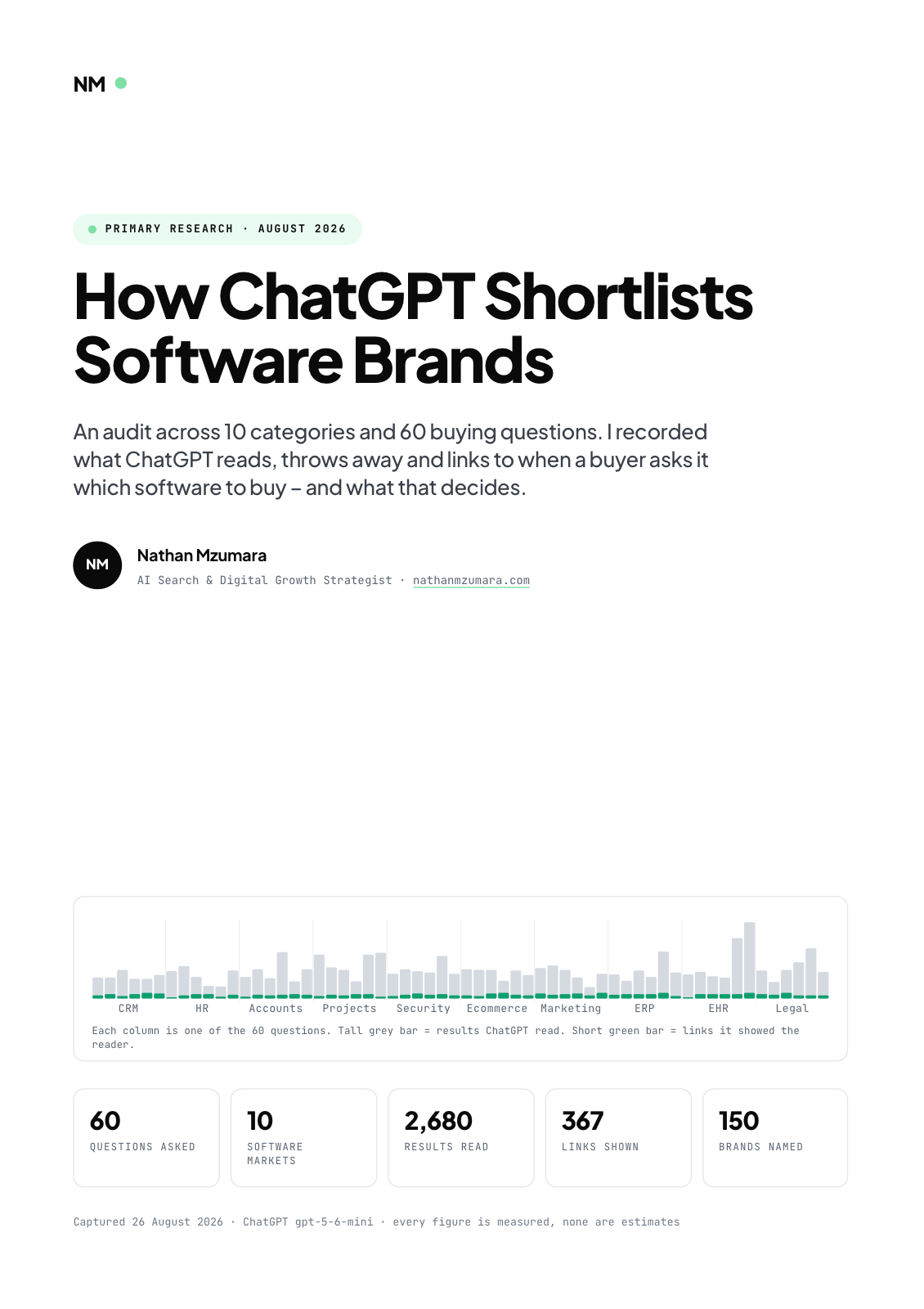
Issue 05. The week AI agents arrived in European browsers and health search rewrote its own rules
TL;DR
Two things happened this week that I think search and growth teams in the UK and Europe are underestimating. AI agents now browse on behalf of your users, and the most visited health content vertical just changed its quality benchmark overnight. Both have real structural implications for how your content gets found, evaluated, and cited.

OpenAI's Codex brings Computer Use and persistent memory to EEA, UK, and Switzerland
- What
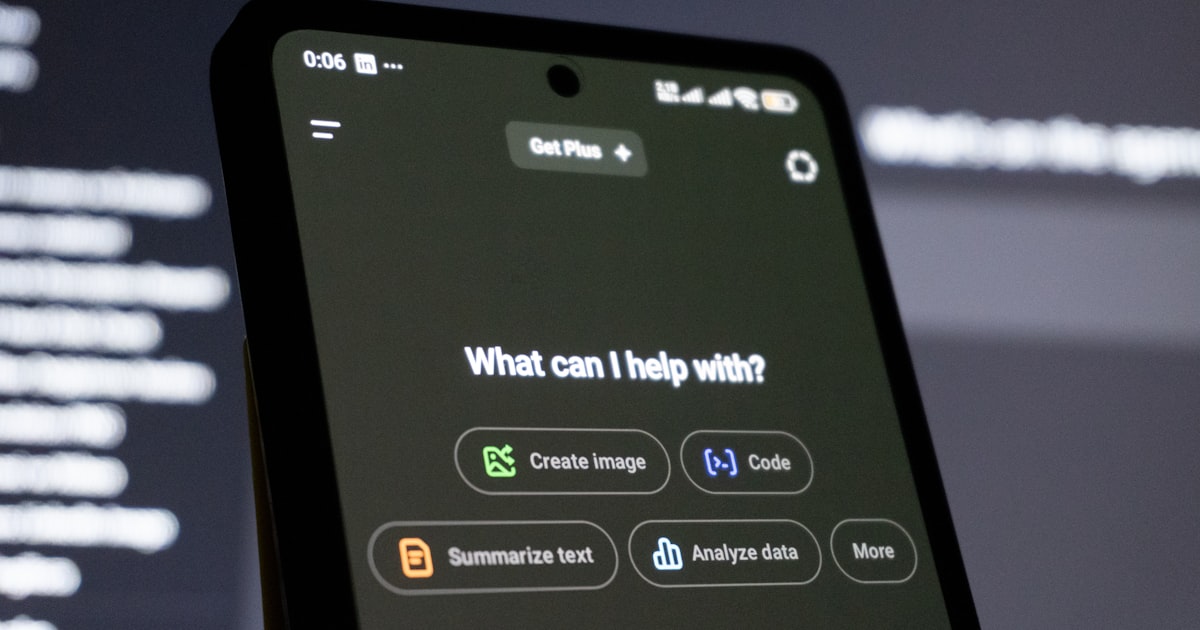
- OpenAI rolled out Computer Use, the Codex Chrome extension, personalised memory, and Chronicle to Codex users in the EEA, UK, and Switzerland on 16 June 2026. The mechanism matters: Computer Use means the AI agent can operate a real browser, navigate pages, click elements, and extract content autonomously, without a human in the loop. The Codex Chrome extension extends that capability directly into the browser layer. Personalised memory means the agent carries context from previous sessions into new ones, so its browsing behaviour changes over time based on what it has already seen and retained.
- When
- Rolled out 16 June 2026, announced via the OpenAI Developers account. No staged rollout window was specified; the announcement implies immediate availability for Codex users in scope.
- How it shifts discovery
- For UK and European teams, this closes the gap that previously kept these agent capabilities out of your markets. The practical implication is that AI agents are now actively browsing your site on behalf of users, not just scraping a cached index. That changes two things. First, your technical stack needs to handle agent traffic gracefully: if your JavaScript-heavy pages fail to render for a headless browser, the agent either gets nothing or gets the wrong thing. Second, because memory is now persistent, an agent that had a poor experience on your site in a previous session may carry that forward. Structured content, clean navigation, and fast server-side rendering are no longer just SEO hygiene, they are agent-readability requirements. What I would do: run your most important landing pages through a headless browser test this week. Check that meaningful content is present in the initial HTML response, not deferred to client-side JS. Then audit your robots.txt and verify you are not inadvertently blocking the agent user-agent strings OpenAI uses.
- Questions to ask
- Are our key landing pages rendering their core content in the initial HTML response, or is it deferred behind JavaScript that a headless agent might not execute?
- Do we have a monitoring setup that flags unusual agent traffic patterns, so we can detect when Codex-type agents are crawling at scale?
- If an agent retains memory across sessions, what impression does our site leave after a first visit, and does that hold up under repeated agent scrutiny?
- Sources
GPT-5.5 Instant now handles health queries at frontier-model level, free to all users

- What
- On 18 June 2026, OpenAI published that GPT-5.5 Instant, the model available free to all ChatGPT users, now performs on health evaluations at a level comparable to OpenAI's frontier thinking models. The model is evaluated using HealthBench and HealthBench Professional, physician-written rubrics that score accuracy, safety, completeness, context awareness, and appropriate escalation across realistic health conversations. More than 230 million people use ChatGPT weekly for health queries. The factuality failure rate in health responses has fallen by 71% over the last two months based on production traffic monitoring.
- When
- Announced 18 June 2026 on the OpenAI blog. GPT-5.5 Instant was released May 2026; the health evaluation data reflects production traffic improvements measured over the two months prior to the announcement.
- How it shifts discovery
- This is a structural shift in how health content is evaluated and surfaced at scale. When the model that handles hundreds of millions of free-tier health queries becomes substantially more accurate and context-aware, it also becomes more selective about the quality of information it surfaces and cites. If your content is in a health-adjacent vertical, the bar for what the model considers a trustworthy, citable source has quietly risen. The model now better recognises red flags, asks for relevant context, and explains uncertainty. That means content that hedges vaguely, omits dosage or referral context, or fails to acknowledge when professional consultation is needed is less likely to be treated as authoritative. The physician-led evaluation framework tells you what the model is being trained to reward: accuracy, clear communication, completeness, instruction-following, and health decision helpfulness. Write to those criteria explicitly. What I would do: audit your top health or health-adjacent pages against those five criteria. Then check whether your content acknowledges uncertainty appropriately and signals when a reader should seek professional advice. That is not just ethical, it is now a GEO signal.
- Questions to ask
- Does our health content meet the five physician-evaluated criteria: accuracy, clear communication, completeness, instruction-following, and health decision helpfulness?
- Are we explicitly signalling when users should seek professional care, and is that signal prominent enough for a model evaluating appropriate escalation?
- How does our content perform if the model is now 71% less likely to surface factually flagged responses? Are we confident our pages would survive that tighter filter?
- Sources
Google Analytics launches Ask Advisor, a Gemini-powered natural language query tool inside GA properties
- What
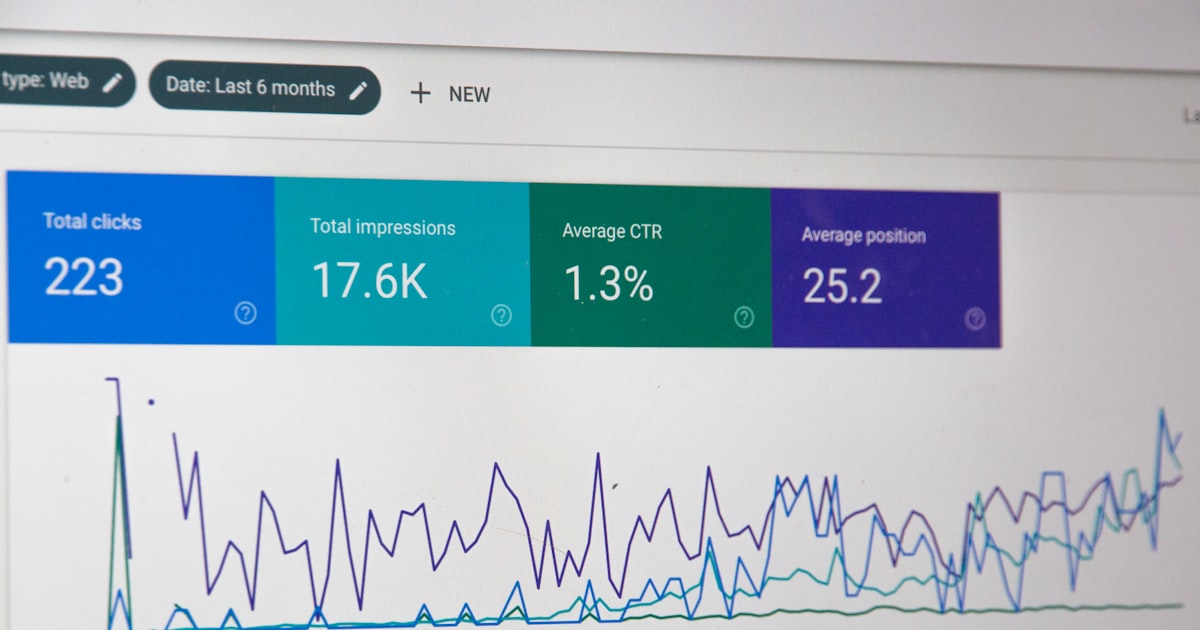
- Google Analytics announced Ask Advisor on 18 June 2026, a Gemini-powered feature built directly into GA properties that lets users ask plain-language questions about their data, such as 'How is my website doing?' or 'Why did revenue drop?', and receive direct answers without building a custom report. The mechanism is a conversational interface sitting on top of your existing GA data streams. No export or third-party connection is required.
- When
- Announced 18 June 2026 via the Google Analytics official account. No phased rollout window was specified in the announcement.
- How it shifts discovery
- The practical value for search and growth teams is speed to insight, particularly for stakeholders who do not work inside GA daily. If your head of growth or a client wants to understand a traffic anomaly, they no longer need to wait for you to build a custom segment. The risk is that natural language queries over complex data models can produce confident-sounding but subtly wrong answers if the question is ambiguous or the data model has gaps. Before relying on Ask Advisor outputs in a stakeholder meeting, test the same question against a manual report you trust. What I would do: enable Ask Advisor in your GA property and run five questions you already know the answer to from manual reports. Compare the outputs. If they match, you can start using it to accelerate routine analysis. If they diverge, note the failure modes before trusting it in a live context.
- Questions to ask
- Have we validated Ask Advisor's outputs against known manual reports before using it in client or leadership-facing contexts?
- Are our GA data streams clean enough for a natural language layer to interpret correctly, or are there known data quality gaps that could produce misleading answers?
- Which routine reporting tasks could Ask Advisor genuinely accelerate, and which require human interpretation of the underlying data structure?
- Sources
Key takeaways
What to walk away with this week
- 01
AI agents with browser-level computer use are now active in UK and European markets. Your site's agent-readability, not just its crawlability, is now a technical SEO priority.
- 02
The free-tier ChatGPT model handling 230 million weekly health queries is now substantially more accurate. If you operate in a health-adjacent vertical, the implicit citation quality bar has risen and your content needs to reflect it.
- 03
Ask Advisor brings natural language querying to GA properties. It is useful for speed to insight, but validate outputs against manual reports before trusting it in high-stakes contexts.
- 04
Persistent memory in AI agents means first impressions on your site may be carried forward into future agent sessions. Content quality and technical rendering are no longer one-time pass or fail checks.
- 05
The physician-led evaluation criteria OpenAI uses for health content (accuracy, clear communication, completeness, instruction-following, health decision helpfulness) are a practical GEO content checklist for any health-adjacent site.