Issue 02. Measuring the AI Search Era
TL;DR
Two years into the AI search transition, most teams are still flying blind. This issue covers the tools and data that change that: Google's new generative AI performance reports in Search Console, Schema.org's first public adoption dataset, and three other developments that directly affect how you build, measure, and position for search in 2026. Read what changed, why it matters, and what to do next.

Google Adds Generative AI Performance Reports to Search Console

- What
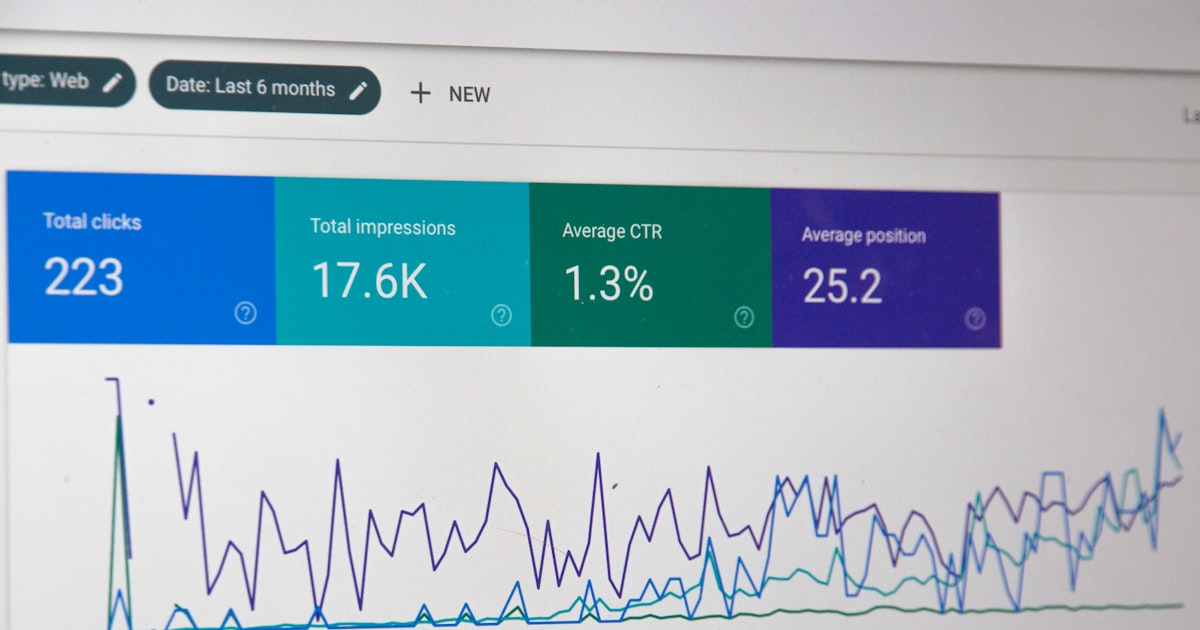
- Google has introduced dedicated generative AI performance reports inside Search Console, covering both Search and Discover surfaces. The reports let you measure impressions, clicks, and click-through rates specifically from AI Overview appearances and other generative AI features, separate from traditional organic results. This closes the single biggest attribution gap in GEO reporting: until now there was no first-party way to know whether your content was appearing in AI-generated answers, let alone whether those appearances were driving traffic. The rollout is currently limited to a subset of accounts.
- When
- Announced June 2026, rolling out to a subset of Search Console accounts from that date.
- How it shifts discovery
- If your reporting stack does not distinguish AI surface traffic from organic blue-link traffic, you cannot make sound decisions about GEO investment or content strategy. These reports are the foundation of any serious measurement approach for generative search. The immediate action is to check whether your property has access today. If it does, set up a baseline report immediately so you have pre- and post-change data from the earliest possible point. If it does not, flag it to your Google account contact or PSO and request early inclusion. Do not wait for a full rollout before building your measurement framework around this data.
- Questions to ask
- Do we currently have access to the generative AI performance reports in Search Console, and if not, what is our plan to get early access?
- How will we restructure our regular reporting to separate AI surface performance from traditional organic, and who owns that work?
- Which of our key landing pages or content clusters are we most likely to be appearing in AI Overviews, and are we set up to verify that now?
- Sources
Schema.org Publishes Monthly Structured Data Adoption Statistics Across the Web
- What
- Schema.org has launched a public usage statistics dataset, publishing monthly aggregate adoption data drawn from crawls across millions of domains. The data is visible directly on individual Schema.org term pages and is also available as a raw CSV on GitHub, making it programmatically accessible. For any given schema type, you can now see how widely it is deployed across the indexed web. This is the first time this kind of adoption-level data has been available from Schema.org itself, rather than inferred from third-party crawl tools.
- When
- Announced 4 June 2026.
- How it shifts discovery
- Structured data strategy has historically relied on guesswork about what competitors and the broader web are doing with markup. That changes now. High adoption rates on a given schema type mean Google and LLMs are receiving strong, consistent signals for that entity type from across the web, which raises the baseline expectation for your own markup quality and completeness. Low adoption rates on a type relevant to your sector signal a genuine differentiation opportunity: you can establish stronger entity signals in an area where most of the web has not yet bothered. For GEO specifically, this dataset tells you which entity types are feeding into LLM training and knowledge graphs at scale. The action is to audit your current structured data implementation against the adoption data, prioritise types where your coverage is below the adoption curve in your sector, and identify low-competition types where early, high-quality implementation could build entity authority ahead of the market.
- Questions to ask
- Which schema types relevant to our business have high web-wide adoption, and are our implementations meeting the quality bar that widespread deployment implies?
- Are there schema types directly relevant to our products or services where adoption is still low, giving us a structured data differentiation window?
- How are we using entity-level structured data to inform our GEO strategy, and does this dataset change our priorities?
- Sources
Key takeaways
What to walk away with this week
- 01
Google's generative AI performance reports in Search Console are the first first-party tool for measuring AI Overview and generative surface traffic. Check access now and build your baseline before the full rollout dilutes the early-mover data advantage.
- 02
Schema.org's public adoption dataset removes the guesswork from structured data strategy. High-adoption types set a quality floor; low-adoption types in your sector are a competitive opportunity worth acting on before the rest of the market catches up.
- 03
GEO measurement is no longer a nice-to-have. With dedicated Search Console reports now in rollout, any team that cannot attribute traffic to AI surfaces is operating without critical data. Restructure your reporting framework now, not when full access arrives.
- 04
Entity signals matter more as search becomes generative. The Schema.org dataset directly shows which entity types are feeding LLMs and knowledge graphs at scale, making structured data decisions a core part of GEO strategy, not an afterthought.
- 05
Both developments reward teams who act early. Generative AI reports are rolling out in phases; Schema.org adoption data reveals windows that close as competitors catch on. Speed of implementation is a genuine advantage here.