GPT-Live Is Here. Voice AI Just Became a Discovery Channel.
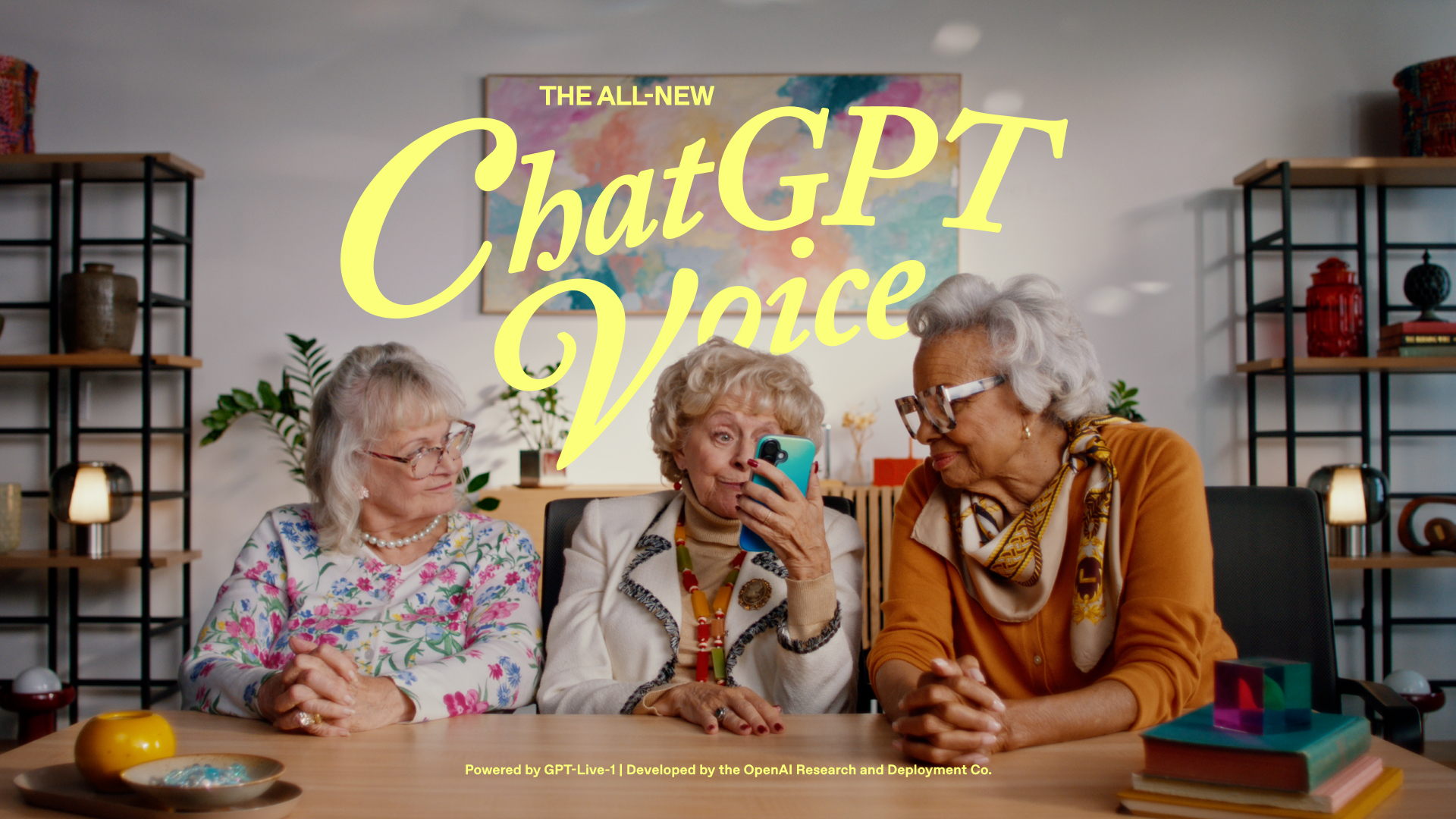
OpenAI launched GPT-Live on 8 July 2026, replacing the old ChatGPT Voice with a new generation of real-time voice models. Unlike every previous version, GPT-Live listens and speaks at the same time. That single architectural shift changes what voice AI is, and what it means for how people discover information.
What Changed and When
The rollout began globally on 8 July 2026. Two model variants shipped at launch: GPT-Live-1 and GPT-Live-1 mini, both available to ChatGPT users worldwide. API access is coming shortly, with a sign-up form already open for developers and enterprises who want early notification.
This replaces both the original cascaded ChatGPT Voice (which chained three separate models: speech-to-text, LLM, then text-to-speech) and the subsequent Advanced Voice Mode, which improved latency but still operated in rigid turn-by-turn exchanges.
How GPT-Live Actually Works
The core change is architectural. Previous voice systems waited for silence before responding, meaning a pause, a hesitation, or background noise could cut you off mid-thought. GPT-Live uses a full-duplex architecture, processing your audio input continuously while generating its own output at the same time. It makes interaction decisions many times per second: speak, listen, pause, or hand off to a background model.
That hand-off is the second major change. When a query needs web search, deeper reasoning, or agentic capability, GPT-Live delegates silently to GPT-5.5 running in the background, then folds the result back into the live conversation without breaking the flow. You ask a complex question; the conversation continues naturally while the answer is being assembled.
The Three-Layer Process in Plain Terms
- Continuous listening: GPT-Live processes incoming audio without waiting for a full sentence or a pause. It can detect intent mid-utterance.
- Real-time interaction decisions: The model chooses whether to interject, acknowledge ("mhmm", "got it"), or stay quiet, based on conversational cues rather than silence detection.
- Background delegation: If the query needs search or reasoning, GPT-Live offloads to GPT-5.5 silently. The conversation does not stall. The answer arrives into the flow when ready.
According to OpenAI's GPT-Live launch documentation, head-to-head evaluations show GPT-Live-1 is preferred over Advanced Voice Mode in 75.7% of matched 5-10 minute conversations, measured on turn-taking, interruption handling, and conversational flow.
Why This Matters for Search and Discovery
More than 150 million people use ChatGPT Voice features every week, according to OpenAI. That number was growing when the experience felt clunky. A voice interface that genuinely feels like talking to someone will accelerate adoption sharply.
The discovery implication is direct. When people speak conversationally to an AI, they ask longer, more specific, more context-rich questions than they type into a search bar. The interface rewards brands and content that can answer those questions clearly and completely, not brands that have optimised for keyword proximity.
GPT-Live's delegation layer means the model is actively performing agentic web search behind the scenes. What it surfaces, and how it summarises it, will reflect the same content-quality signals that already matter for ChatGPT's broader search and GEO product direction. Thin content, unclear structure, and brand ambiguity become harder to hide when the AI is synthesising answers in real time.
What Your Content and Brand Presence Need to Look Like
| Before (Cascaded / Turn-Based) | Now (GPT-Live Full-Duplex) |
|---|---|
| Short keyword queries dominate voice | Long, conversational, multi-part questions |
| Users tolerate pauses and restarts | Continuous flow means higher engagement, longer sessions |
| AI reads a single answer | AI synthesises, searches, and follows up in real time |
| Brand visibility tied to ranked links | Brand visibility tied to being cited in AI-generated answers |
The practical actions follow from that table. Your content needs clear, direct answers to specific questions. Your brand needs a consistent, unambiguous identity so AI systems can attribute answers to you accurately. And your structured data, entity clarity, and topical authority all matter more now, not less.
If you are already thinking about how AI systems discover and represent your brand, the principles behind how alternative AI-powered discovery channels are indexing the web apply here too. GPT-Live is not a standalone product. It is part of a broader shift where the interface between a person and information is increasingly conversational, agentic, and AI-mediated.
The Immediate Action
Audit your most important content for conversational answerability. Read it aloud. Does it answer a spoken question clearly in the first two sentences? If not, it will not surface well in a GPT-Live conversation. That is the test worth running this week.
Developers wanting API access can register for GPT-Live API early access via OpenAI's sign-up form now.